Potassium Hydroxide → Octyl-sepharose CL-4B
Reaction equation

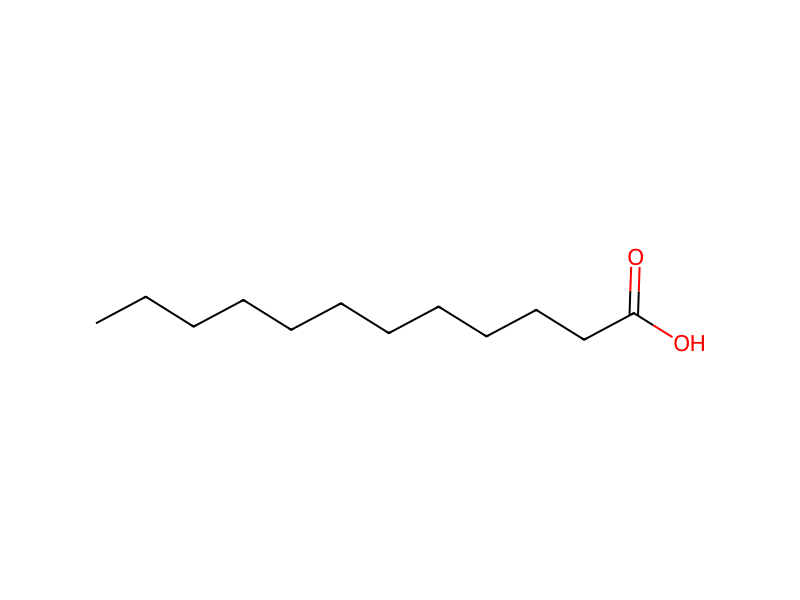
[CH2:1]([O:5][CH2:6][CH2:7][CH2:8][CH2:9][CH2:10][CH2:11][CH2:12][CH3:13])[CH:2]1[O:4][CH2:3]1.[OH-:14].[K+]>C(O)(=O)CCCCCCCCCCC.[OH-].[K+].O>[CH2:1]([O:5][CH2:6][CH2:7][CH2:8][CH2:9][CH2:10][CH2:11][CH2:12][CH3:13])[CH:2]([CH2:3][OH:14])[OH:4]Participants
Reactant 2


Product 1

Reagents, catalysts & solvents 3

Conditions
- Temperature
- 140 °C
Procedure
In an autoclave, 208 g of the resulting crude octyl glycidyl ether, 104.8 g of water, 5.82 g of lauric acid and 18.5 g of potassium hydroxide were charged. The resulting mixture was stirred at 140° C. for 5 hours. The reaction mixture was dehydrated at 100° C. under reduced pressure (6.67 kPa), followed by the addition of 9.7 g of lauric acid and 2.72 g of potassium hydroxide. After reaction at 160° C. for 15 hours, the reaction mixture was purified by distillation under reduced pressure (53 to 67 Pa, 120 to 123° C.), whereby 110.2 g of monooctyl glyceryl ether was obtained. As a result of GLC, it was found that the resulting product had a purity not less than 99% and the content of organochlorine compounds was not greater than 100 ppm.
Workup
- customwas dehydrated at 100° C. under reduced pressure (6.67 kPa)
- customAfter reaction at 160° C. for 15 hours
- distillationthe reaction mixture was purified by distillation under reduced pressure (53 to 67 Pa, 120 to 123° C.)
Sources & evidence
- ORD record
- ord-9438a06d833a496cb74ff02deab5d5e1
- Source dataset
- uspto-grants-2002_08
- Patent number
- US06437196B1
Reaction notes
Loading…