Sulfuric Acid → Phenol
Reaction equation

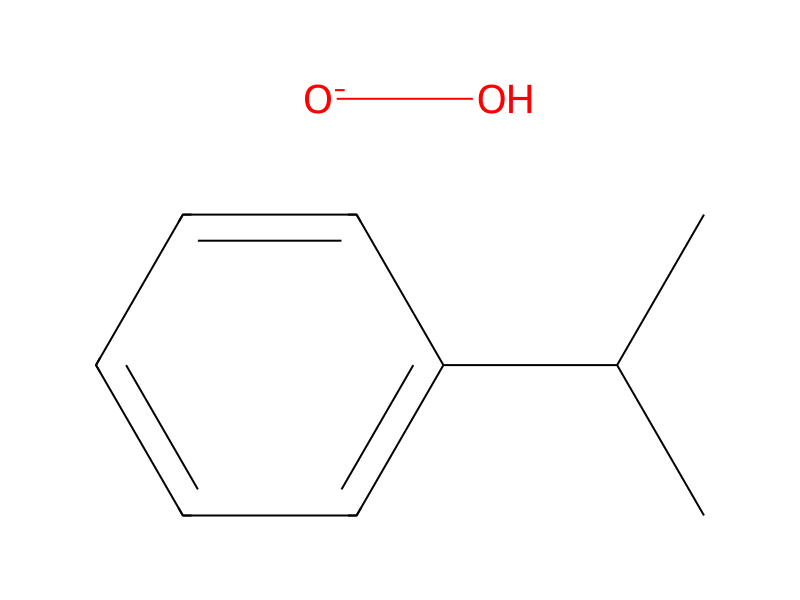
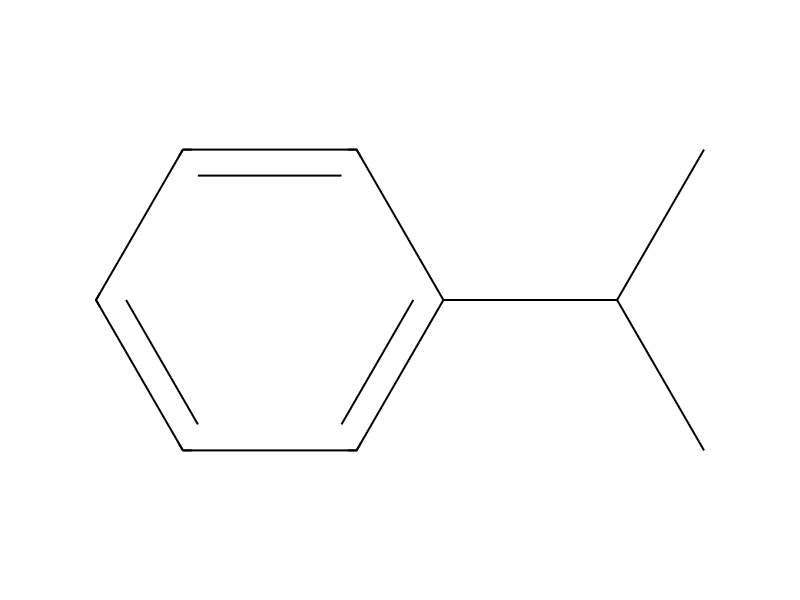
[O-:1]O.[C:3]1([CH:9]([CH3:11])[CH3:10])[CH:8]=[CH:7][CH:6]=[CH:5][CH:4]=1.S(=O)(=O)(O)[OH:13]>>[C:3]1([OH:13])[CH:8]=[CH:7][CH:6]=[CH:5][CH:4]=1.[C:3]1([CH:9]([CH3:11])[CH3:10])[CH:8]=[CH:7][CH:6]=[CH:5][CH:4]=1.[CH3:11][C:9]([C:3]1[CH:8]=[CH:7][CH:6]=[CH:5][CH:4]=1)=[CH2:10].[C:9]([C:3]1[CH:8]=[CH:7][CH:6]=[CH:5][CH:4]=1)(=[O:1])[CH3:11]Participants
6




Procedure
On the industrial scale, the cumene hydroperoxide is usually treated with dilute sulphuric acid (5 to 25 percent concentration) at a temperature of about 50° C. to 70° C. After the cleavage is complete, the reaction mixture is separated and the oil layer distilled to obtain phenol and acetone together with cumene, alpha-methylstyrene, acetophenone and tars. The cumene may be recycled for conversion to the hydroperoxide and subsequent cleavage. The phenol produced in this way is suitable for use in resins although further purification is required for pharmaceutical grade product.
Workup
- customthe reaction mixture is separated
- distillationthe oil layer distilled
Sources & evidence
- ORD record
- ord-39b483c745c246a1b2b01d25395de21e
- Source dataset
- uspto-grants-2002_08
- Patent number
- US06441251B1
Reaction notes
Loading…