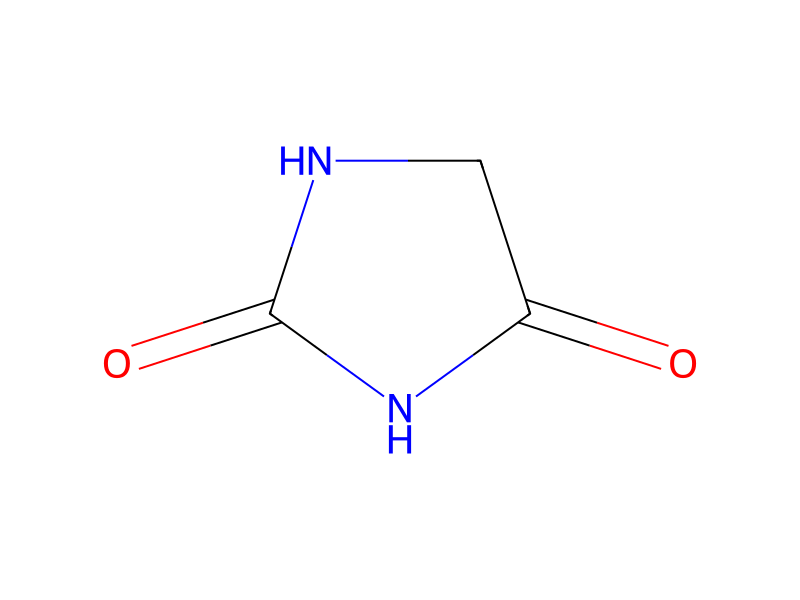
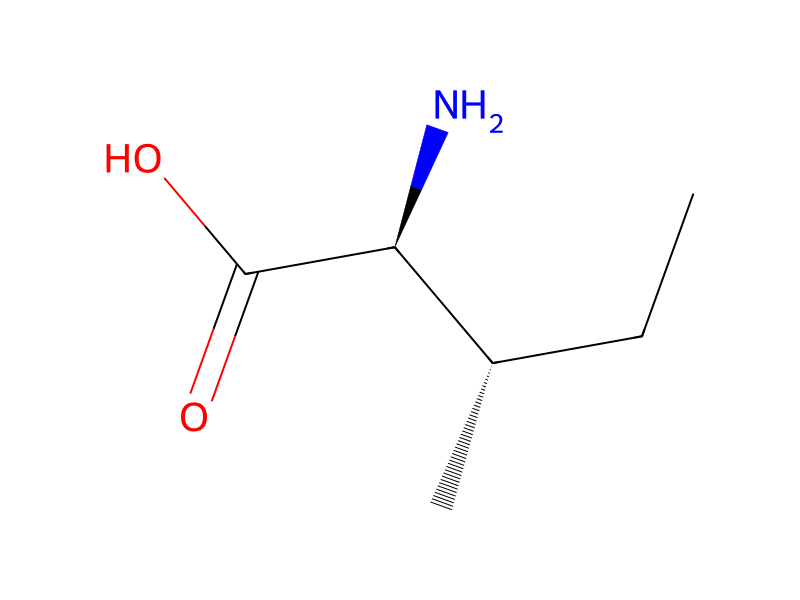
Hydantoin → L-Isoleucine
Reaction equation

N1CC(=O)NC1=O.[NH2:8][C@@H:9]([C:14]([OH:16])=[O:15])[C@H:10]([CH2:12][CH3:13])[CH3:11].N1CC(=O)NC1=O.N[C@H](C(O)=O)[C@H](CC)C.N1CC(=O)NC1=O.C(N[C@H](C(O)=O)[C@H](CC)C)(=O)N>C[C@@H](CC)C=O>[NH2:8][C@H:9]([C:14]([OH:16])=[O:15])[C@H:10]([CH2:12][CH3:13])[CH3:11]Participants
Reactant 4


Product 1
Reagents, catalysts & solvents 1

Procedure
In another embodiment, as shown in Scheme 4, the invention is directed to a method for producing L-isoleucine comprising converting (S)-2-methylbutyraldehyde to a diastereomeric mixture of D-allo-isoleucine hydantoin and L-isoleucine hydantoin under conditions whereby no significant racemization of the chiral center in (S)-2-methylbutyraldehyde occurs, followed by contacting said diastereomeric hydantoin mixture with an L-hydantoinase to stereoselectively hydrolyze any L-isoleucine hydantoin in the mixture to the corresponding N-carbamoyl-L-isoleucine. Preferably in the claimed method the contacting of the diastereomeric hydantoin mixture with an L-hydantoinase is carried out under conditions permitting the simultaneous epimerization of the chiral center at C-5 of the hydantoin. As discussed further below, the simultaneous epimerization permits the reaction to be carried out to substantial completion so that the diastereomeric hydantoin mixture is converted to N-carbamoyl-L-isoleucine in high yield. The N-carbamoyl-L-isoleucine is then decarbamoylated to produce L-isoleucine.
Workup
- customthe reaction
Sources & evidence
- ORD record
- ord-54d0d1c3707640a2baaf6da1ca2f1c97
- Source dataset
- uspto-grants-2004_12
- Patent number
- US06830904B2
Reaction notes
Loading…