Hydantoin → HCID 854211, compound
Reaction equation

[NH:1]1[CH2:7][C:5](=[O:6])[NH:4][C:2]1=[O:3].N1[CH2:14][C:12](=O)NC1=O.N[C@H:16](C(O)=O)[C@H:17](CC)C.N1CC(=O)NC1=[O:26].N[C@@H](C(O)=O)[C@H](CC)C.N1CC(=O)NC1=O.N[C@H](C(O)=O)[C@@H](CC)C.N1CC(=O)NC1=O.N[C@@H](C(O)=O)[C@@H](CC)C>>[C:2]([NH:1][C@@H:7]([C:5]([OH:6])=[O:26])[C@H:16]([CH2:14][CH3:12])[CH3:17])(=[O:3])[NH2:4]Participants
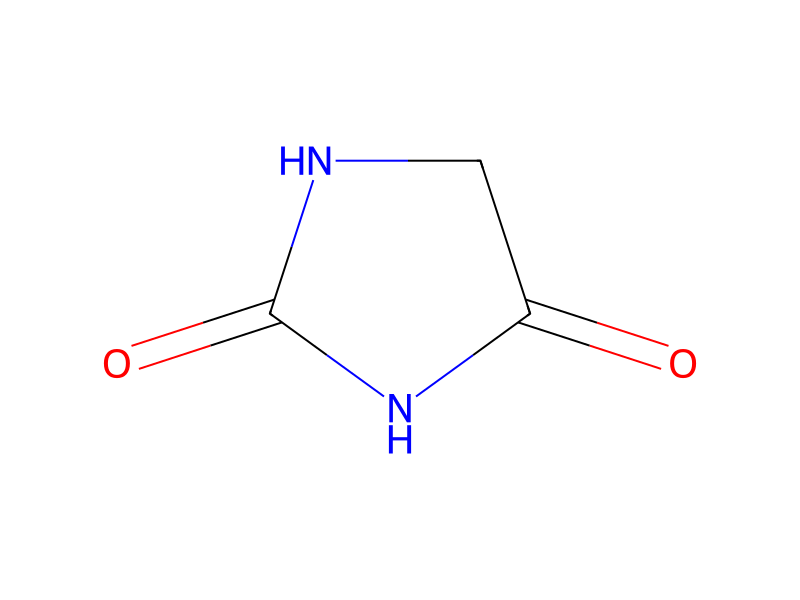


Procedure
When this racemization occurs in the presence of a D-hydantoinase, an equilibrium is established between hydantoins possessing the R and S absolute configurations at C-5 of the hydantoin. For example, an equilibrium would be established between L-isoleucine hydantoin and D-allo-isoleucine hydantoin; similarly an equilibrium would be established between L-allo-isoleucine hydantoin and D-isoleucine hydantoin. When a mixture of L-isoleucine hydantoin and D-allo-isoleucine hydantoin is contacted with a D-hydantoinase, the D-allo-isoleucine hydantoin is selectively hydrolyzed by the D-hydantoinase to form the N-carbamoyl-D-allo-isoleucine. As the D-allo-isoleucine hydantoin is depleted from the mixture by D-hydantoinase-catalyzed hydrolysis, the equilibrium between the L-isoleucine hydantoin and the D-allo-isoleucine hydantoin is re-established under the epimerizing conditions, continuously generating additional D-allo-isoleucine hydantoin for stereoselective hydrolysis by the D-hydantoinase enzyme. This continual supply of the hydantoin of D-allo-isoleucine occurs during the course of the reaction until substantially all of the hydantoin has been converted to N-carbamoyl-D-allo-isoleucine. In this way, the reaction can be carried out to substantial completion. By the term “substantial completion” is meant that at least about 75%, preferably at least about 85%, and more preferably at least about 95%, of the mixture of L-isoleucine hydantoin and D-allo-isoleucine hydantoin is converted to N-carbamoyl-D-allo-isoleucine. The yield of N-carbamoyl-D-allo-isoleucine produced by the method of the present invention can approach 100% of theoretical, given sufficient reaction time and/or sufficient hydantoinase enzyme. Similarly, when a mixture of D-isoleucine hydantoin and L-allo-isoleucine hydantoin is contacted with a D-hydantoinase, the D-isoleucine hydantoin is selectively hydrolyzed by the D-hydantoinase to form the N-carbamoyl-D-isoleucine. As the D-isoleucine hydantoin is depleted from the mixture by D-hydantoinase-catalyzed hydrolysis, the equilibrium between the L-allo-isoleucine hydantoin and the D-isoleucine hydantoin is re-established under the epimerizing conditions, continuously generating additional D-isoleucine hydantoin for stereoselective hydrolysis by the D-hydantoinase enzyme. This continual supply of the hydantoin of D-isoleucine occurs during the course of the reaction until substantially all of the mixture of D-isoleucine hydantoin and L-allo-isoleucine hydantoin has been converted to N-carbamoyl-D-isoleucine. In this way, the reaction can be carried out to substantial completion so that the mixture of D-isoleucine hydantoin and L-allo-isoleucine hydantoin is converted almost completely to N-carbamoyl-D-allo-isoleucine. In similar fashion using an L-hydantoinase, L-allo-isoleucine can be produced from a mixture of D-isoleucine hydantoin and L-allo-isoleucine hydantoin, and L-isoleucine can be produced form a mixture of D-allo-isoleucine hydantoin and L-isoleucine hydantoin.
Sources & evidence
- ORD record
- ord-c8f42756c3a141d291f58bc726446401
- Source dataset
- uspto-grants-2004_12
- Patent number
- US06830904B2
Reaction notes
Loading…