1,6-Dibromohexane → 1-[4-[(6-Bromohexyl)oxy]butyl]benzene
Reaction equation

Br[CH2:2][CH2:3][CH2:4][CH2:5][CH2:6][CH2:7][Br:8].[OH-].[K+].[C:11]1([CH2:17][CH2:18][CH2:19][CH2:20][OH:21])[CH:16]=[CH:15][CH:14]=[CH:13][CH:12]=1>S([O-])(O)(=O)=O.C([N+](CCCC)(CCCC)CCCC)CCC>[Br:8][CH2:7][CH2:6][CH2:5][CH2:4][CH2:3][CH2:2][O:21][CH2:20][CH2:19][CH2:18][CH2:17][C:11]1[CH:16]=[CH:15][CH:14]=[CH:13][CH:12]=1Participants
5
Reactant 3
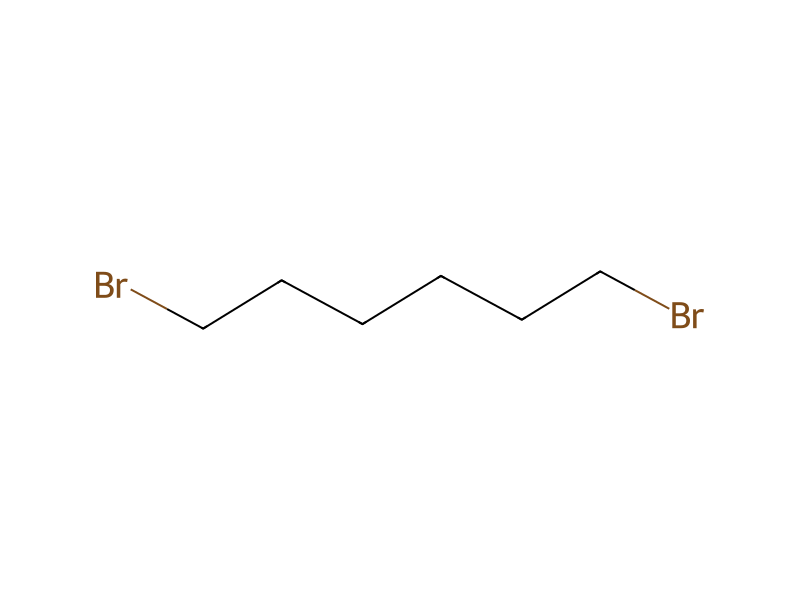


Product 1

Reagents, catalysts & solvents 1

Procedure
To a mixture of 20.2 ml (0.131 mol) of 1,6-dibromohexane, 16 g of powdered (0.242 mol KOH) caustic pot acid and 2.2 g (0.0066 mol) of tetra-n-butylammonium hydrogen sulphate are added 10 ml (0.0655 mol) of 4-phenylbutanol within 15 minutes, with stirring, at a temperature between 20 and 30° C. The reaction was spontaneously exothermic and the temperature could hardly be controlled. Towards the end of the addition, hard lumps were formed and the reaction mixture was impossible to stir.
Workup
- additionTowards the end of the addition
- customhard lumps were formed
- stirringto stir
Sources & evidence
- ORD record
- ord-4305499b7b12422ab9b847d52e5df7ee
- Source dataset
- uspto-grants-2004_12
- Patent number
- US06835857B2
Reaction notes
Loading…