O-Phenylenediamine → 2-[[1-(phenylmethyl)-4-piperidinyl]methyl]-1H-benzimidazole
Reaction equation

Cl.[C:2]1([CH2:8][N:9]2[CH2:14][CH2:13][CH:12]([CH2:15][C:16](O)=O)[CH2:11][CH2:10]2)[CH:7]=[CH:6][CH:5]=[CH:4][CH:3]=1.[C:19]1([NH2:26])[C:20]([NH2:25])=[CH:21][CH:22]=[CH:23][CH:24]=1.[OH-].[K+]>O>[C:2]1([CH2:8][N:9]2[CH2:14][CH2:13][CH:12]([CH2:15][C:16]3[NH:26][C:19]4[CH:24]=[CH:23][CH:22]=[CH:21][C:20]=4[N:25]=3)[CH2:11][CH2:10]2)[CH:7]=[CH:6][CH:5]=[CH:4][CH:3]=1Participants
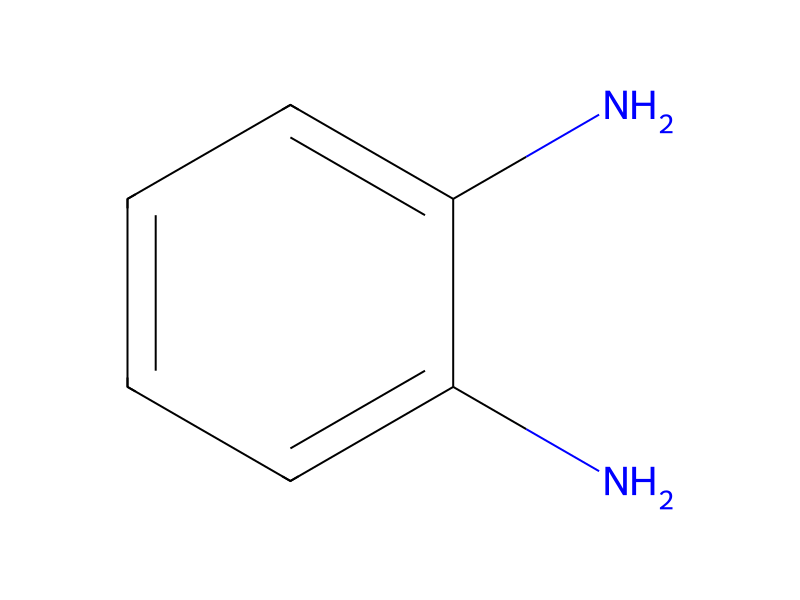




Procedure
To 73 parts of hot (70° C.) polyphosphoric acid were added 27 parts of 1-(phenylmethyl)-4-piperidineacetic acid hydrochloride: temperature rose to 100° C. When the addition was complete, there were added portionwise 14 parts of 1,2-benzenediamine and stirring and heating was continued for 50 minutes at 170° C. The hot reaction mixture was poured into 300 parts of warm water. The acid solution was alkalized with a potassium hydroxide solution. The precipitated free base was filtered off, washed with water and extracted with trichloromethane. The extract was dried and evaporated. The solid residue was recrystallized from a mixture of 2-propanone and methanol, yielding 17 parts of 2-[[1-(phenylmethyl)-4-piperidinyl]methyl]-1H-benzimidazole; mp. 221.5°-222° C. (compound 1).
Workup
- customrose to 100° C
- additionWhen the addition
- temperatureheating
- filtrationThe precipitated free base was filtered off
- washwashed with water
- extractionextracted with trichloromethane
- customThe extract was dried
- customevaporated
- customThe solid residue was recrystallized from a mixture of 2-propanone and methanol
Sources & evidence
- ORD record
- ord-015bdc4084a44e71955ede5b633b1c6d
- Source dataset
- uspto-grants-1987_09
- Patent number
- US04695575
Reaction notes
Loading…