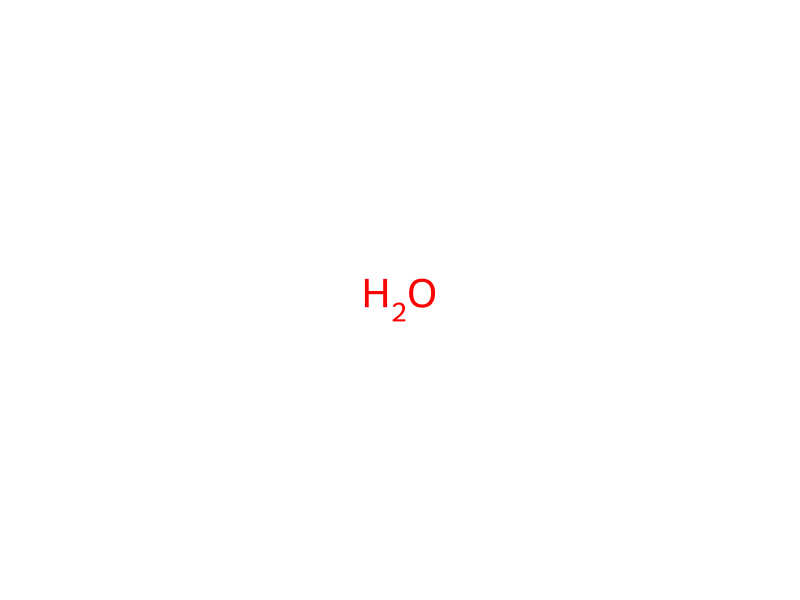
Water → Ethyl 2-diethylphosphono-4-(2-tetrahydropyranyloxy)butanoate
Reaction equation

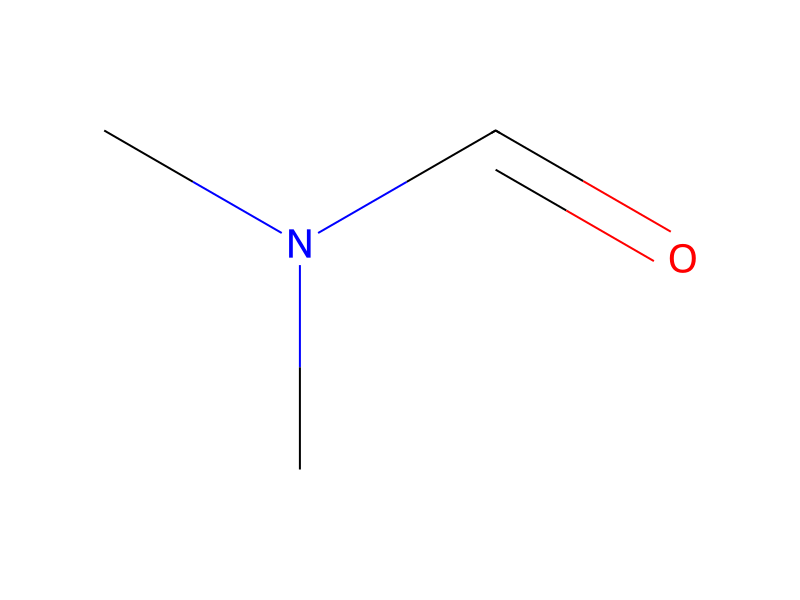
[CH2:1]([O:3][P:4]([CH2:9][C:10]([O:12][CH2:13][CH3:14])=[O:11])([O:6][CH2:7][CH3:8])=[O:5])[CH3:2].Br[CH2:16][CH2:17][O:18][CH:19]1[CH2:24][CH2:23][CH2:22][CH2:21][O:20]1.O>CN(C)C=O>[CH2:7]([O:6][P:4]([CH:9]([CH2:16][CH2:17][O:18][CH:19]1[CH2:24][CH2:23][CH2:22][CH2:21][O:20]1)[C:10]([O:12][CH2:13][CH3:14])=[O:11])([O:3][CH2:1][CH3:2])=[O:5])[CH3:8]Participants
Reactant 3


Product 1

Reagents, catalysts & solvents 1
Conditions
- Temperature
- 0 °C
Procedure
856 mg of a sodium hydride dispersion (60% in oil) was washed three times with dry pentane under a nitrogen stream to separate the oil. After drying, the powder obtained was suspended in 7.2 ml of dry dimethylformamide under a nitrogen stream, and the suspension was cooled to 0° C. Then, 4.26 ml of ethyl diethylphosphonoacetate was dropwise added thereto over a period of one hour. The mixture was stirred at room temperature for 30 minutes and cooled to 0° C., and 5.4 g of 2-bromo-1-(2-tetrahydropyranyloxy)ethane was added thereto. The mixture was stirred at 65° C. overnight, and the reaction mixture was poured into 40 ml of water and extracted three times with 20 ml of ethyl acetate. The ethyl acetate layer was washed sequentially with water and a saturated sodium chloride aqueous solution and then dried over anhydrous sodium sulfate. The solvent was distilled off under reduced pressure, and the residue was separated by silica gel column chromatography (60 g of Kieselgel 60) by using a mixture of hexane/ethyl acetate (5/1 followed by 1/1). The product-containing fraction was again purified by silica gel column chromatography (110 g of Kieselgel 60) by using a mixture of hexane/acetone (4/1) to obtain 2.55 g of ethyl 2-diethylphosphono-4-(2-tetrahydropyranyloxy)butanoate as a colorless oily substance.
Workup
- wash856 mg of a sodium hydride dispersion (60% in oil) was washed three times with dry pentane under a nitrogen stream
- customto separate the oil
- customAfter drying
- customthe powder obtained
- temperaturecooled to 0° C.
- stirringThe mixture was stirred at 65° C. overnight
- extractionextracted three times with 20 ml of ethyl acetate
- washThe ethyl acetate layer was washed sequentially with water
- dry with materiala saturated sodium chloride aqueous solution and then dried over anhydrous sodium sulfate
- distillationThe solvent was distilled off under reduced pressure
- customthe residue was separated by silica gel column chromatography (60 g of Kieselgel 60)
- additiona mixture of hexane/ethyl acetate (5/1 followed by 1/1)
- customThe product-containing fraction was again purified by silica gel column chromatography (110 g of Kieselgel 60)
- additiona mixture of hexane/acetone (4/1)
Sources & evidence
- ORD record
- ord-6e4850b0bcd643a19c05d3ae57498eb9
- Source dataset
- uspto-grants-1989_07
- Patent number
- US04851387
Reaction notes
Loading…