5-Chlorosalicylic Acid → 4,4'-Dihydroxybiphenyl-3,3'-dicarboxylic acid
Reaction equation

[OH:1][C:2]1[CH:10]=[CH:9][C:8](Cl)=[CH:7][C:3]=1[C:4]([OH:6])=[O:5]>[OH-].[Na+].[Pd]>[OH:1][C:2]1[CH:10]=[CH:9][C:8]([C:8]2[CH:9]=[CH:10][C:2]([OH:1])=[C:3]([C:4]([OH:6])=[O:5])[CH:7]=2)=[CH:7][C:3]=1[C:4]([OH:6])=[O:5]Participants
4
Reactant 1
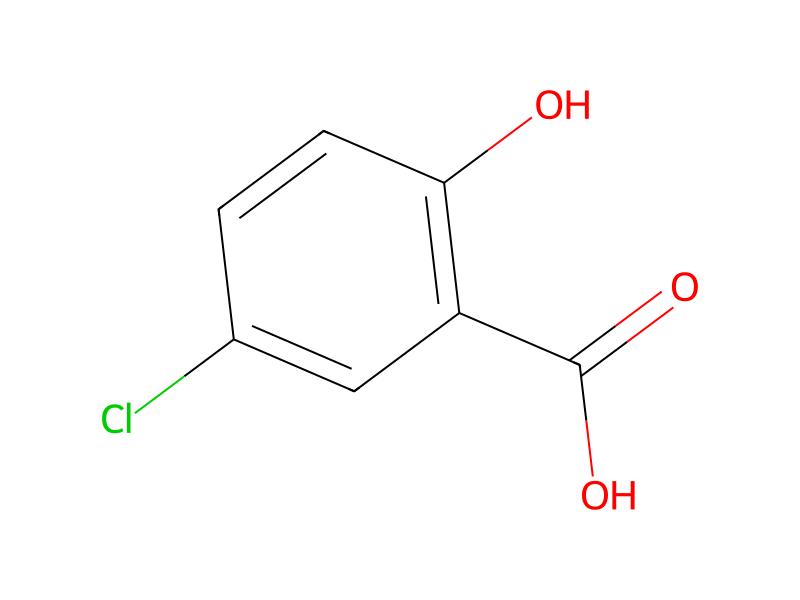
Product 1

Reagents, catalysts & solvents 2


Conditions
- Temperature
- 120 °C
Procedure
2-hydroxy 5-chlorobenzoic acid (3.4 g, 20 mmol) was dissolved in 45 cm3 of a sodium hydroxide solution (10% w/v) and palladium on charcoal (10%, 0.5 g) was added. The mixture was placed in a glass liner in an autoclave which was flushed thoroughly with carbon monoxide, then pressurised with carbon monoxide to 2 MNm-2 and heated to 120° C. with stirring for three hours. The mixture was then allowed to cool, the catalyst removed by filtration, and the product precipitated from the aqueous solution by acidification to pH1 with 1M hydrochloric acid. The coupled product (4,4'-dihydroxybiphenyl 3,3'-dicarboxylic acid) was obtained in 80% yield.
Workup
- customwas flushed thoroughly with carbon monoxide
- temperatureto cool
- customthe catalyst removed by filtration
- customthe product precipitated from the aqueous solution by acidification to pH1 with 1M hydrochloric acid
Sources & evidence
- ORD record
- ord-213558fc03db4d83888ce9827233321a
- Source dataset
- uspto-grants-1989_07
- Patent number
- US04851538
Reaction notes
Loading…