Triethyl phosphite → (4S)-3-benzyloxycarbonyl-4-[2-(diethoxyphosphinyl)ethyl]-1,3-oxazolidin-5-one
Reaction equation

[CH2:1]([O:8][C:9]([N:11]1[C@@H:15]([CH2:16][CH2:17]Br)[C:14](=[O:19])[O:13][CH2:12]1)=[O:10])[C:2]1[CH:7]=[CH:6][CH:5]=[CH:4][CH:3]=1.[P:20]([O:27]CC)([O:24][CH2:25][CH3:26])[O:21][CH2:22][CH3:23]>>[CH2:1]([O:8][C:9]([N:11]1[C@@H:15]([CH2:16][CH2:17][P:20]([O:24][CH2:25][CH3:26])([O:21][CH2:22][CH3:23])=[O:27])[C:14](=[O:19])[O:13][CH2:12]1)=[O:10])[C:2]1[CH:7]=[CH:6][CH:5]=[CH:4][CH:3]=1Participants
3
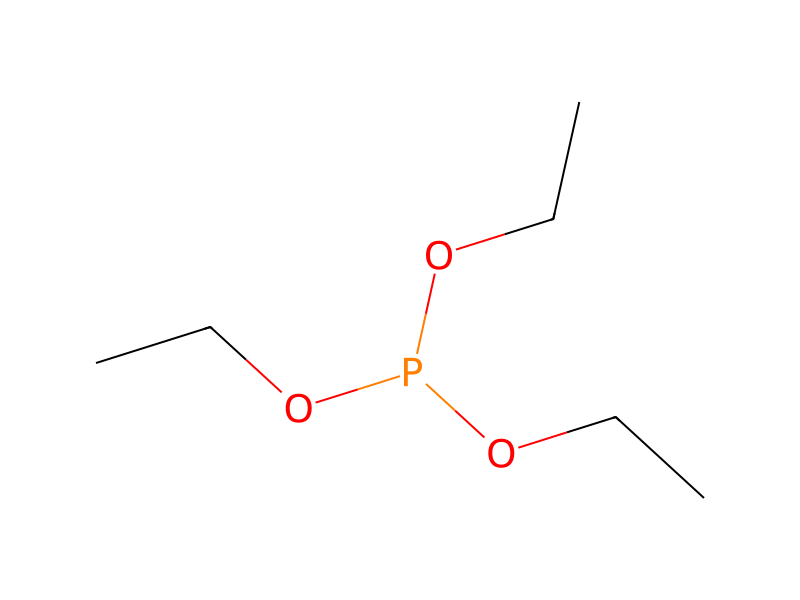


Conditions
- Temperature
- 120 °C
Procedure
3.28 g (10 mmol) of (4S)-3-benzyloxycarbonyl-4-(2-bromomethyl)-1,3-oxazolidin-5-one (from Example 5) are mixed with 3.39 g (20 mmol) of triethyl phosphite and the mixture is heated under argon for 18 hours at 120° C. The excess triethyl phosphite is distilled off under high vacuum and the residue is purified by chromatography on silica gel (mobile phase: dichloromethane/acetonitrile). 1.34 g (34.8% of theory) of (4S)-3-benzyloxycarbonyl-4-[2-(diethoxyphosphinyl)ethyl]-1,3-oxazolidin-5-one are obtained as a colorless oil. Analytical data:
Workup
- distillationThe excess triethyl phosphite is distilled off under high vacuum
- customthe residue is purified by chromatography on silica gel (mobile phase: dichloromethane/acetonitrile)
Sources & evidence
- ORD record
- ord-4d2feb18876b485aab716bc7ce58c8b3
- Source dataset
- uspto-grants-1997_01
- Patent number
- US05591861
Reaction notes
Loading…