Hydrogen Peroxide → Tridecanedioic acid
Reaction equation
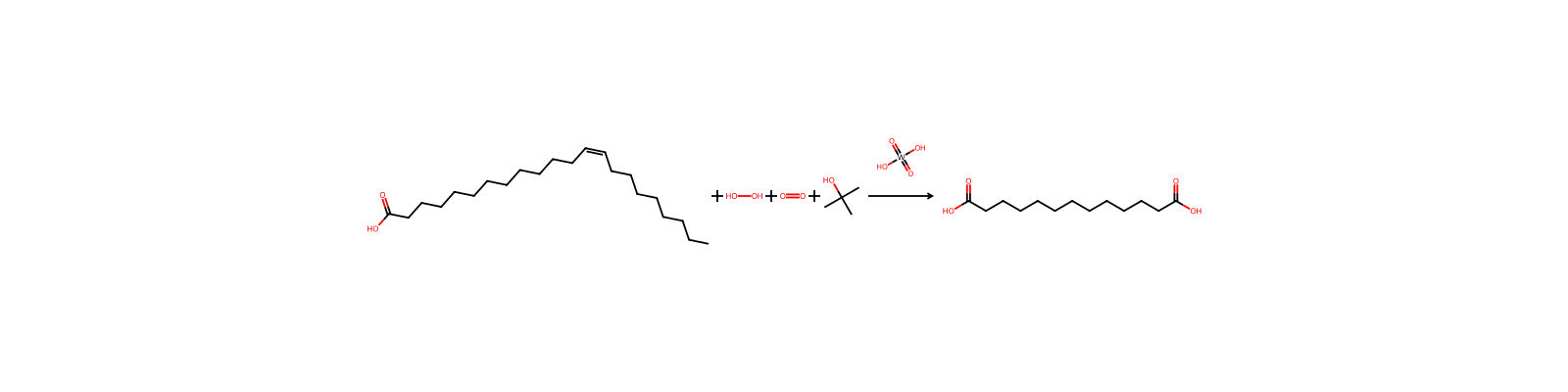
[C:1]([OH:24])(=[O:23])[CH2:2][CH2:3][CH2:4][CH2:5][CH2:6][CH2:7][CH2:8][CH2:9][CH2:10][CH2:11]C/C=C\CCCCCCCC.[OH:25]O.O=O.[C:29]([OH:33])([CH3:32])(C)C>O[W](O)(=O)=O>[C:1]([OH:24])(=[O:23])[CH2:2][CH2:3][CH2:4][CH2:5][CH2:6][CH2:7][CH2:8][CH2:9][CH2:10][CH2:11][CH2:32][C:29]([OH:33])=[O:25]Participants
Reactant 4



Product 1

Reagents, catalysts & solvents 1

Procedure
To a 1000-ml three-necked flask equipped with refluxing condenser and mechanic stirrer, erucic acid (101.4 g, 0,300 mol; recrystallized with 95% ethanol), tert-butanol (600 ml; freshly distilled), H2O2 (20.4 ml 50% aqueous solution, 0.3 mol) and tungstic acid (7.47 g, 0.03 mol). The mixture was refluxed for 70 hours while a stream of oxygen gas was bubbled through the solution. The reaction was monitored with TLC (ethyl acetate/hexane). After the reaction was completed, the yellow catalyst was filtered off and washed with hot methanol (2×20 ml) at once. The catalyst was recovered (about 100%). Most of the solvent in the mother liquid was removed under reduced pressure. The residue was then held at about -5° C. for several hours. Once a white solid appeared, hexane (100 ml) was added. The product brassylic acid was obtained by filtration (63.2 g, 76%). The brassylic acid was purified by recrystallization in methanol. mp: 110°-114° C. The stoichiometry of the reaction dictates that the oxidative cleavage of a 1,2-disubstituted olefinic double bond results in the formation of equal amounts of pelargonic acid and brassylic acid. Of the two acids formed, the generation of brassylic acid was monitored simply due to the relative ease of the analysis.
Workup
- customTo a 1000-ml three-necked flask equipped
- temperaturewith refluxing condenser and mechanic stirrer
- customwas bubbled through the solution
- filtrationthe yellow catalyst was filtered off
- washwashed with hot methanol (2×20 ml) at once
- customThe catalyst was recovered (about 100%)
- customMost of the solvent in the mother liquid was removed under reduced pressure
- waitThe residue was then held at about -5° C. for several hours
- additionhexane (100 ml) was added
Sources & evidence
- ORD record
- ord-cbfb891048884a409e00ecd1c4d2f403
- Source dataset
- uspto-grants-1997_01
- Patent number
- US05596111
Reaction notes
Loading…