Acetonitrile → HCID 14209973, compound
Reaction equation

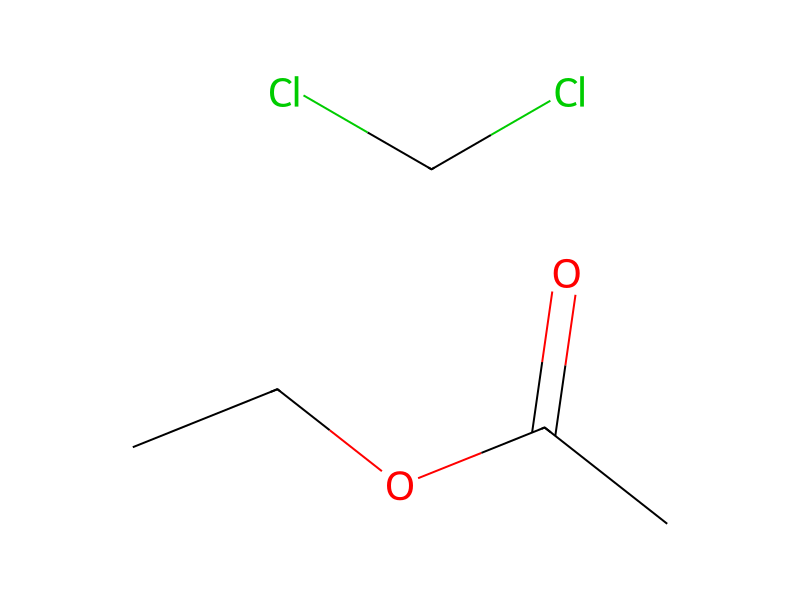
[NH2:1][C:2]1[CH:17]=[CH:16][C:15]([CH2:18][CH3:19])=[CH:14][C:3]=1[C:4]([NH:6][C:7]1[C:8](Cl)=[N:9][CH:10]=[CH:11][CH:12]=1)=[O:5].C(#N)C.ClCCl.C(OCC)(=O)C>S1(CCCC1)(=O)=O>[CH2:18]([C:15]1[CH:16]=[CH:17][C:2]2[NH:1][C:8]3[N:9]=[CH:10][CH:11]=[CH:12][C:7]=3[NH:6][C:4](=[O:5])[C:3]=2[CH:14]=1)[CH3:19]Participants
5
Reactant 3


Product 1

Reagents, catalysts & solvents 1

Conditions
- Temperature
- 170 °C
Procedure
160.0 g (0.58 mol) of the 2-amino-5-ethyl-N-(2-chloropyridin-3-yl)benzamide obtained were dissolved in 256 ml of sulpholane and heated to 170° C. with stirring for 20 minutes. The mixture was left to cool, stirred with 1 liter of acetonitrile, the resulting crystal slurry was suction filtered and washed successively with 50 ml acetonitrile and 100 ml conc. ammonia. It was recrystallised from hot 70% acetic acid and after drying in a circulating air dryer 114.0 g (48% of theory) of pale yellow crystals were obtained, m.p. 232°-234° C., RF 0.78 (Macherey-Nagel, PolygramRSIL G/UV254, pre-coated plastic sheets for TLC, eluant: dichloromethane/ethyl acetate 1/1 v/v).
Workup
- waitThe mixture was left
- temperatureto cool
- filtrationfiltered
- washwashed successively with 50 ml acetonitrile and 100 ml conc. ammonia
- customIt was recrystallised from hot 70% acetic acid
- customafter drying in a circulating air dryer 114.0 g (48% of theory) of pale yellow crystals
- customwere obtained
Sources & evidence
- ORD record
- ord-c149636269a04ceabf4bf3e913a04ecc
- Source dataset
- uspto-grants-1989_10
- Patent number
- US04873236
Reaction notes
Loading…