Sodium Carbonate → 1-Bromo-2-(bromomethyl)-3,5-dichlorobenzene
Reaction equation

[Br:1][C:2]1[CH:7]=[C:6]([Cl:8])[CH:5]=[C:4]([Cl:9])[C:3]=1[CH2:10]O.P(Br)(Br)[Br:13].C(=O)([O-])[O-].[Na+].[Na+]>ClCCl>[Br:1][C:2]1[CH:7]=[C:6]([Cl:8])[CH:5]=[C:4]([Cl:9])[C:3]=1[CH2:10][Br:13]Participants
5
Reactant 3

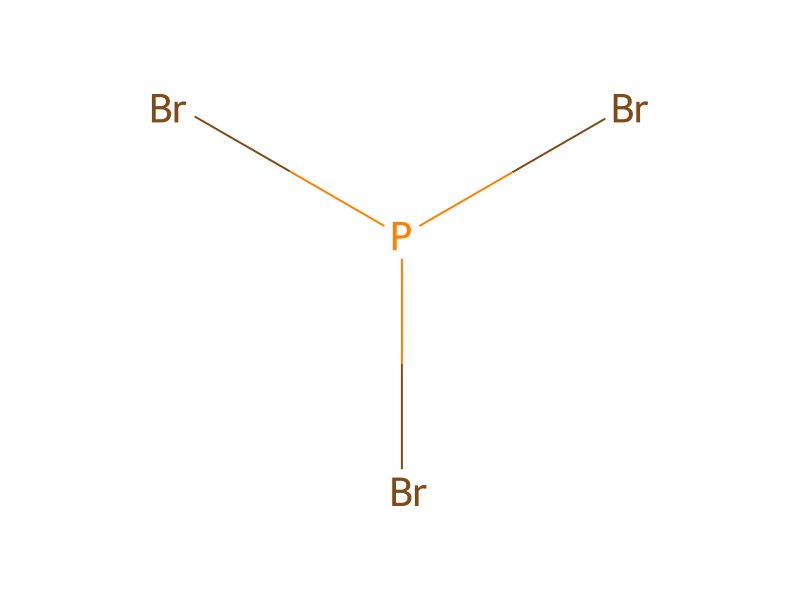

Product 1

Reagents, catalysts & solvents 1

Procedure
3.1 g of the benzyl alcohol 35.4 were dissolved in 40 ml of dry dichloromethane and admixed dropwise at 5° C. with a solution of 0.455 ml of phosphorus tribromide in 10 ml of dichloromethane. The reaction mixture was stirred overnight and then neutralized with 5 ml of a saturated aqueous sodium carbonate solution. The organic phase was removed, dried over magnesium sulfate, filtered and concentrated under reduced pressure. The residue was purified by column chromatography on silica gel with n-heptane as the eluent. 2-Bromo-4,6-dichlorobenzyl bromide 35.3 was obtained.
Workup
- customThe organic phase was removed
- dry with materialdried over magnesium sulfate
- filtrationfiltered
- concentrationconcentrated under reduced pressure
- customThe residue was purified by column chromatography on silica gel with n-heptane as the eluent
Sources & evidence
- ORD record
- ord-6e293970af944d609abb954eacd082e2
- Source dataset
- uspto-grants-2010_07
- Patent number
- US07759366B2
Reaction notes
Loading…