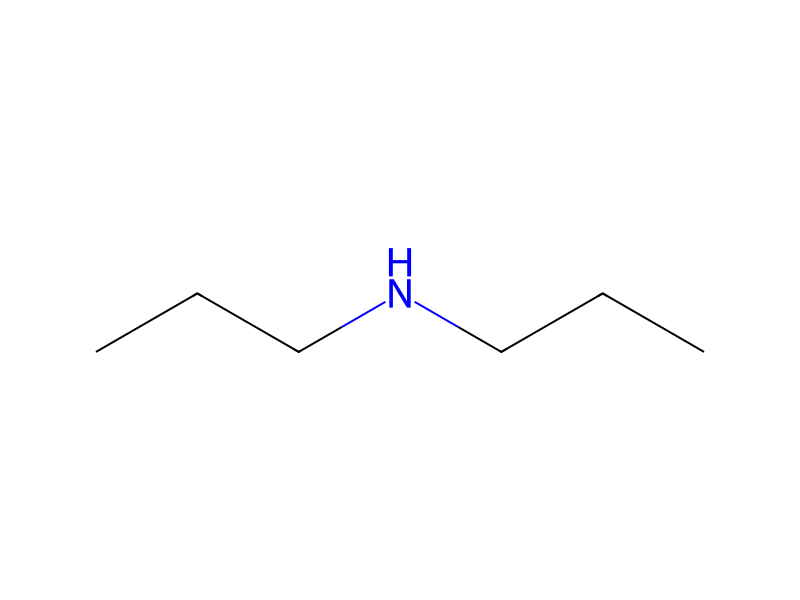
Dipropylamine → HCID 20216259, compound
Reaction equation

[CH2:1]([C:3]([OH:25])([C:15]1[CH:20]=[CH:19][CH:18]=[C:17]([C:21]([F:24])([F:23])[F:22])[CH:16]=1)[C:4]1[CH:9]=[CH:8][C:7]([O:10][CH2:11][CH2:12][CH2:13]Br)=[CH:6][CH:5]=1)[CH3:2].[CH2:26]([NH:29][CH2:30][CH2:31][CH3:32])[CH2:27][CH3:28]>>[CH2:1]([C:3]([OH:25])([C:15]1[CH:20]=[CH:19][CH:18]=[C:17]([C:21]([F:24])([F:23])[F:22])[CH:16]=1)[C:4]1[CH:9]=[CH:8][C:7]([O:10][CH2:11][CH2:12][CH2:13][N:29]([CH2:30][CH2:31][CH3:32])[CH2:26][CH2:27][CH3:28])=[CH:6][CH:5]=1)[CH3:2]Participants
3


Procedure
20.8 g. of α-ethyl-α-(3-trifluoromethylphenyl)-4-(3-bromopropoxy)-benzylalcohol and 41 ml. of dipropyl amine are slightly refluxed with stirring for 6 hours. After cooling, the reaction mixture is evaporated under reduced pressure. To the residue water is added and it is extracted with benzene. The benzene phase is washed with water, dried over anhydrous potassium carbonate and evaporated. The residue is fractionated in vacuo to yield 17.2 g. of the desired compound, boiling at 176° to 178° C./6.6 Pa.
Workup
- temperatureAfter cooling
- customthe reaction mixture is evaporated under reduced pressure
- additionTo the residue water is added
- extractionit is extracted with benzene
- washThe benzene phase is washed with water
- dry with materialdried over anhydrous potassium carbonate
- customevaporated
- customto yield 17.2 g
Sources & evidence
- ORD record
- ord-a309b04a986b489ca914d0c89bfc3531
- Source dataset
- uspto-grants-1987_02
- Patent number
- US04645779
Reaction notes
Loading…