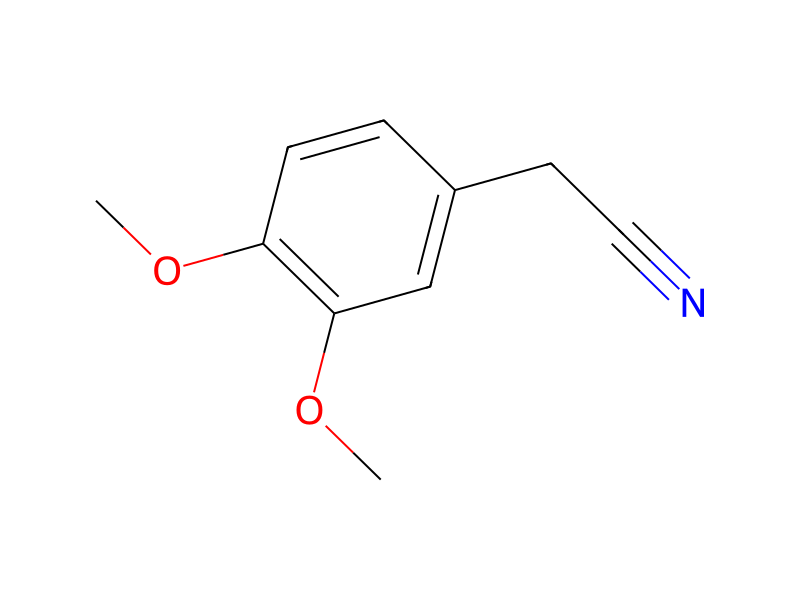
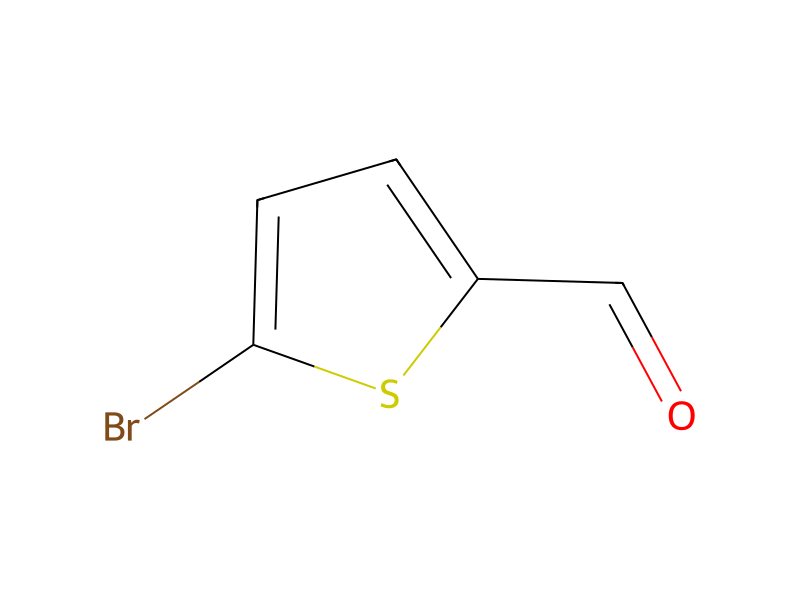
Morpholine → (Z)-2-(3,4-dimethoxy-phenyl)-3-(5-morpholin-4-yl-thiophen-2-yl)-acrylonitrile
Reaction equation

N1CCOCC1.BrC1SC(C=O)=CC=1.[N:15]1([C:21]2[S:25][C:24]([CH:26]=O)=[CH:23][CH:22]=2)[CH2:20][CH2:19][O:18][CH2:17][CH2:16]1.[CH3:28][O:29][C:30]1[CH:31]=[C:32]([CH:36]=[CH:37][C:38]=1[O:39][CH3:40])[CH2:33][C:34]#[N:35]>>[CH3:28][O:29][C:30]1[CH:31]=[C:32](/[C:33](=[CH:26]/[C:24]2[S:25][C:21]([N:15]3[CH2:16][CH2:17][O:18][CH2:19][CH2:20]3)=[CH:22][CH:23]=2)/[C:34]#[N:35])[CH:36]=[CH:37][C:38]=1[O:39][CH3:40]Participants
5



Procedure
Through the procedure as employed in Production step 1, an amine moiety derived from morpholine (523 mg) was introduced into 5-bromothiophene-2-carboxaldehyde (382 mg), to thereby yield 5-morpholin-4-yl-thiophene-2-carbaldehyde (yield: 176 mg, 45%). The produced 5-morpholin-4-yl-thiophene-2-carbaldehyde (172 mg) was condensed with 3,4-dimethoxybenzyl cyanide (154 mg) through Method A (production step 2), to thereby yield the target product (yield: 46 mg, 15%).
Sources & evidence
- ORD record
- ord-881f4219c35148faa1aaecdf11bf81ca
- Source dataset
- uspto-grants-2014_04
- Patent number
- US08697742B2
Reaction notes
Loading…