Triethyl phosphite → HCID 86600083, compound
Reaction equation

[Br:1][C:2]1[CH:7]=[C:6]([CH2:8]Br)[C:5]([Br:10])=[CH:4][C:3]=1[CH2:11]Br.[P:13]([O:20][CH2:21][CH3:22])([O:17]CC)[O:14][CH2:15][CH3:16]>>[Br:10][C:5]1([P:13]([O:14][CH2:15][CH3:16])(=[O:17])[O:20][CH2:21][CH3:22])[C:4]([P:13]([O:20][CH2:21][CH3:22])(=[O:17])[O:14][CH2:15][CH3:16])=[C:3]([CH3:11])[C:2]([Br:1])=[CH:7][CH:6]1[CH3:8]Participants
3
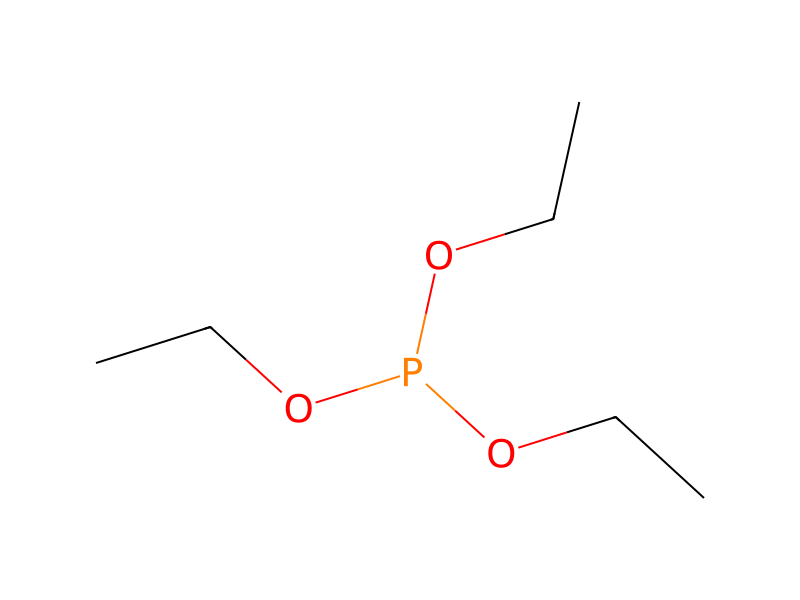


Conditions
- Temperature
- 180 °C
Procedure
The mixture of 2, 5-dibromo-α,α′-dibromo-p-xylene (67) (7.58 g, 0.018 mol) and triethyl phosphite (60 ml) was refluxed at 180° C. overnight. The excess triethyl phosphite was removed under reduced pressure, 60 ml of hexanes was added, and white solid was formed. The solid was collected by filtration, washed three times with 20 ml of hexanes and gave 7.93 g (82.2%) of product.1H NMR (CDCl3, 500 MHz) δppm: 7.62 (s, 2H, Ar—H), 4.06 (m, 8H, CH2), 3.32 (d, J=20.5 Hz, 4H, CH2), 1.28 (t, J=7.0 Hz, 12H, CH3)13C NMR (CDCl3, 125.7 MHz) δppm: 135.2, 132.5, 123.6, 62.35, 62.32, 33.4, 32.2, 16.31, 16.28GC-MS (relative intensity %): 491 (M+, <5%).
Workup
- customThe excess triethyl phosphite was removed under reduced pressure, 60 ml of hexanes
- additionwas added
- customwhite solid was formed
- filtrationThe solid was collected by filtration
- washwashed three times with 20 ml of hexanes
Sources & evidence
- ORD record
- ord-737fcfb6b64c4e5f84d1d7fa20634013
- Source dataset
- uspto-grants-2008_12
- Patent number
- US07459106B2
Reaction notes
Loading…