Malonic Acid → N,N'-Dicyclohexylurea
Reaction equation

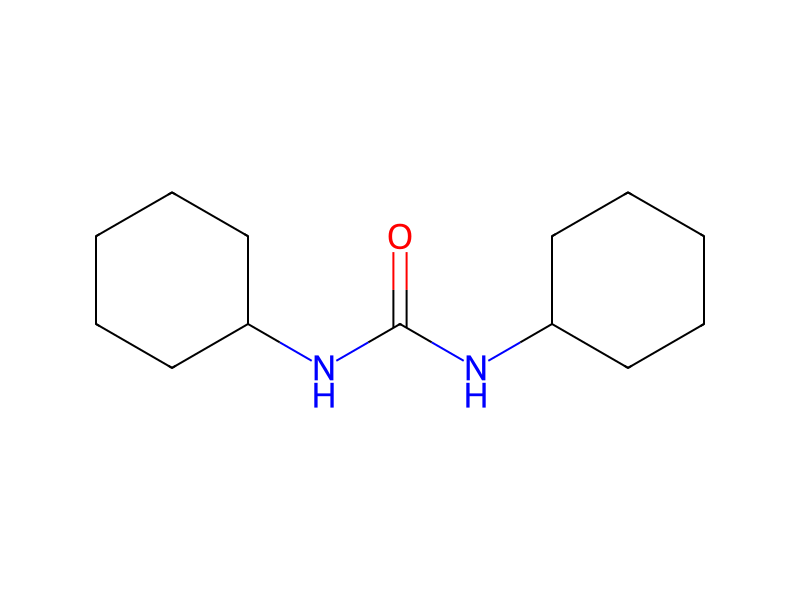
C(O)(=O)CC(O)=[O:4].C1(C(O)C)C=CC=CC=1.[CH:17]1([N:23]=[C:24]=[N:25][CH:26]2[CH2:31][CH2:30][CH2:29][CH2:28][CH2:27]2)[CH2:22][CH2:21][CH2:20][CH2:19][CH2:18]1>C(#N)C>[CH:26]1([NH:25][C:24]([NH:23][CH:17]2[CH2:18][CH2:19][CH2:20][CH2:21][CH2:22]2)=[O:4])[CH2:31][CH2:30][CH2:29][CH2:28][CH2:27]1Participants
5
Reactant 3



Product 1
Reagents, catalysts & solvents 1

Procedure
Malonic acid (12 g, 0.11 mol) was dissolved in acetonitrile (450 mL) in an Erlenmeyer flask (1 L) together with 1-phenyl-ethanol (26 g, 0.22 mol). Dicyclohexylcarbodiimide (45 g) was added in portions and with cooling over 10 min so the temperature did not exceed 30° C. A precipitate of dicyclohexyl urea formed almost immediately. Stirring at RT continued over the week-end to complete the reaction. Dicyclohexyl urea was removed by filtration and the filter cake was washed with addition acetonitrile (10 mL). The combined solution was evaporated in vacuum to give the crude product as colourless oil. Yield: 29 g, 93%.
Workup
- temperaturewith cooling over 10 min so the temperature
- customdid not exceed 30° C
Sources & evidence
- ORD record
- ord-89c519da4006402697625f65f8045746
- Source dataset
- uspto-grants-2012_09
- Patent number
- US08257786B2
Reaction notes
Loading…