Chloroacetic Acid → 3-Bromo-2-chloro-5-methanesulfonylpyridine
Reaction equation

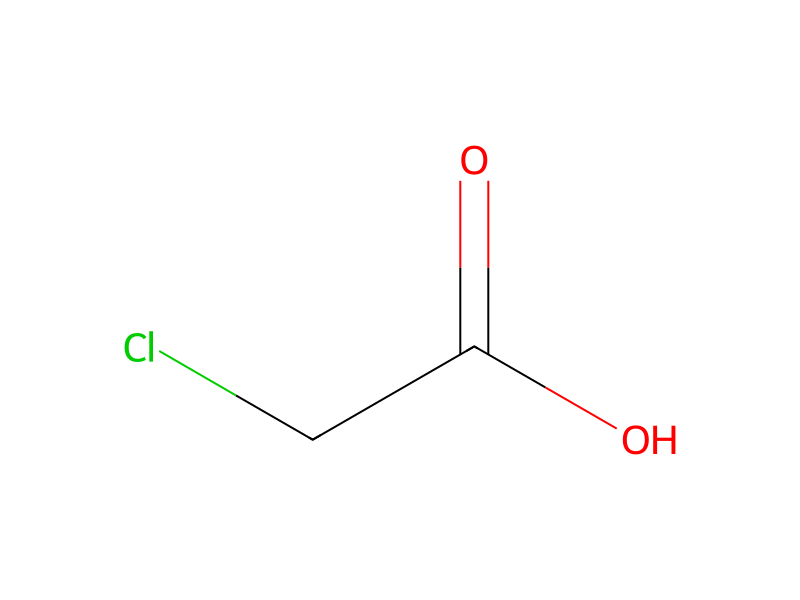
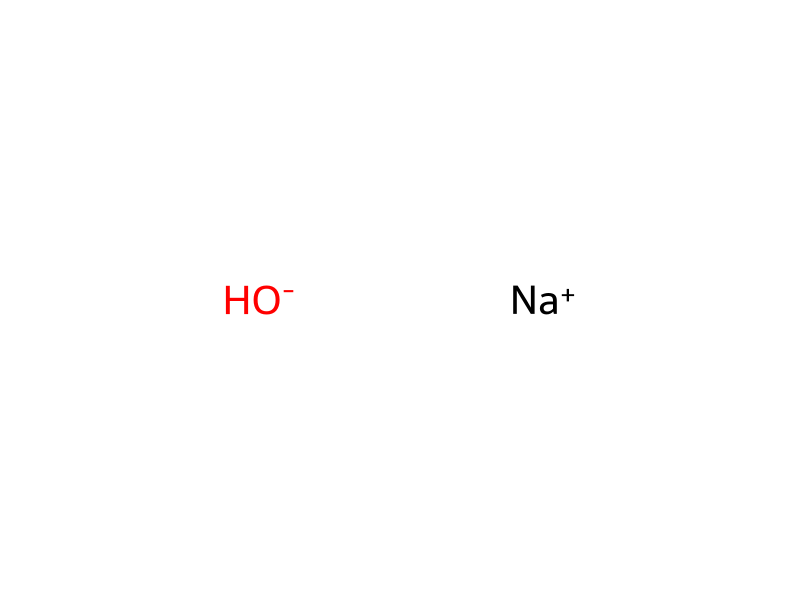
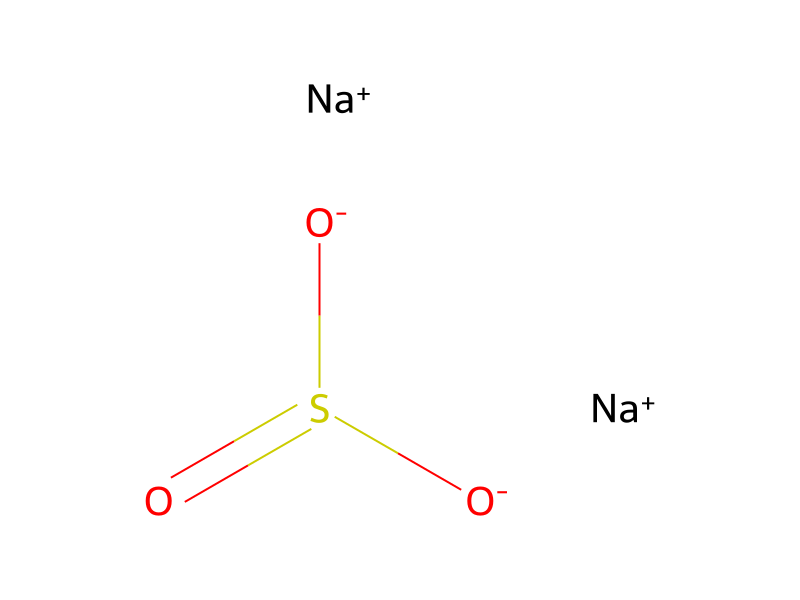
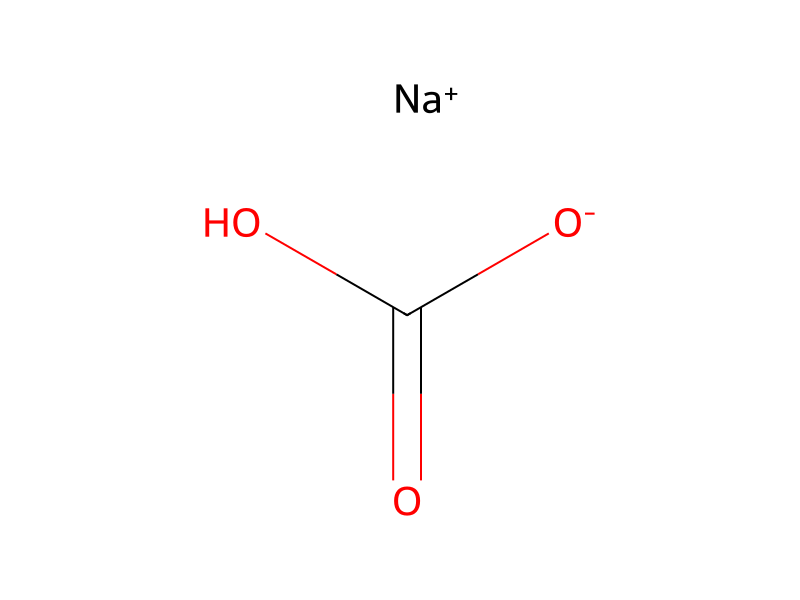
S([O-])([O-])=O.[Na+].[Na+].C(=O)(O)[O-].[Na+].[Br:12][C:13]1[CH:14]=[C:15]([S:20](Cl)(=[O:22])=[O:21])[CH:16]=[N:17][C:18]=1[Cl:19].Cl[CH2:25]C(O)=O.[OH-].[Na+]>O>[Br:12][C:13]1[C:18]([Cl:19])=[N:17][CH:16]=[C:15]([S:20]([CH3:25])(=[O:22])=[O:21])[CH:14]=1Participants


Conditions
- Temperature
- 15 °C
Procedure
A stirred solution of sodium sulfite (4.80 g, 38.1 mmol) and sodium bicarbonate (6.10 g, 72.6 mmol) in water (100 mL) was cooled to 15° C., and 5-bromo-6-chloropyridine-3-sulfonyl chloride (10.00 g, 34.4 mmol) was added. After being stirred at 15° C. for 3 hours and then at room temperature overnight under a nitrogen atmosphere, the mixture was heated to 40° C., and a solution of 2-chloroacetic acid (3.80 g, 40.2 mmol) and sodium hydroxide (1.90 g. 47.5 mmol) in water (20 mL) was added. The resulting mixture was stirred at reflux for 48 hours and then cooled to room temperature. The precipitated product was collected by filtration, washed with water (50 mL) and purified by column chromatography (gradient elution with 15-20% ethyl acetate in petroleum ether) to afford 3-bromo-2-chloro-5-methanesulfonyl-pyridine (1.80 g, 6.65 mmol) as a white solid. A solution of 2-chloroacetic acid (1.90 g, 20.1 mmol) and sodium hydroxide (0.80 g, 20.0 mmol) in water (10 mL) was added to the filtrate. The mixture was heated at reflux overnight, and then evaporated to remove most of the water (about 100 mL). The residue was cooled to room temperature, and then extracted with dichloromethane (80 mL×3). The combined organic layers were dried over sodium sulfate and concentrated in vacuo. The residue was purified by flash column chromatography (gradient elution with 15-20% ethyl acetate in petroleum ether) to afford another batch of 3-bromo-2-chloro-5-methanesulfonyl-pyridine (1.30 g, 4.8 mmol, yield of two batches 35.5%) as a white solid (reference: U.S. Pat. No. 5,424,481).
Workup
- temperatureat room temperature overnight under a nitrogen atmosphere, the mixture was heated to 40° C.
- stirringThe resulting mixture was stirred
- temperatureat reflux for 48 hours
- temperaturecooled to room temperature
- filtrationThe precipitated product was collected by filtration
- washwashed with water (50 mL)
- custompurified by column chromatography (gradient elution with 15-20% ethyl acetate in petroleum ether)
Sources & evidence
- ORD record
- ord-ae3cc57afa9044fd9b5ac31b3f0901b8
- Source dataset
- uspto-grants-2014_02
- Patent number
- US08642629B2
Reaction notes
Loading…