Potassium Hydroxide → 4-(4-chloro-1-ethyl-1H-pyrazol-5-yl)-2-thiophenecarboxylic acid
Reaction equation

[Cl:1][C:2]1[CH:3]=[N:4][N:5]([CH2:16][CH3:17])[C:6]=1[C:7]1[CH:8]=[C:9]([C:12]([O:14]C)=[O:13])[S:10][CH:11]=1.[OH-].[K+]>C1COCC1.O>[Cl:1][C:2]1[CH:3]=[N:4][N:5]([CH2:16][CH3:17])[C:6]=1[C:7]1[CH:8]=[C:9]([C:12]([OH:14])=[O:13])[S:10][CH:11]=1Participants
4



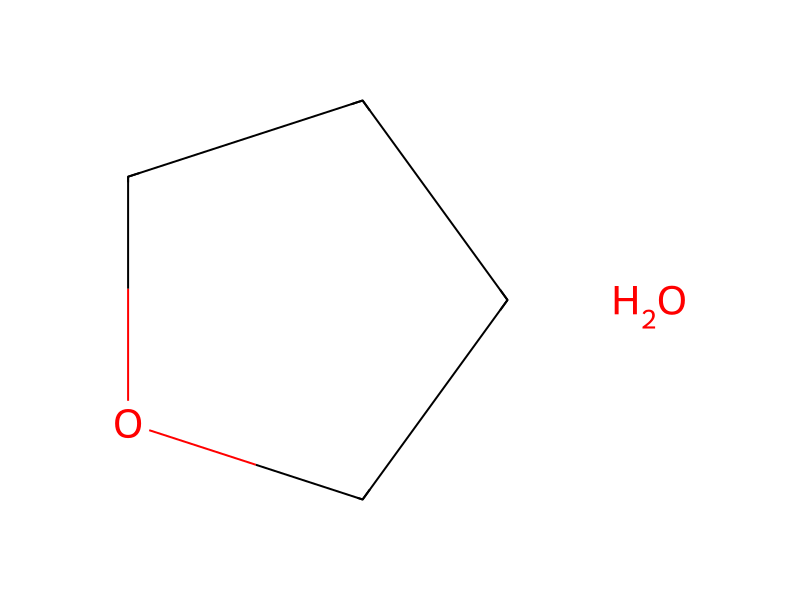
Conditions
- Temperature
- 50 °C
Procedure
To a solution of methyl 4-(4-chloro-1-ethyl-1H-pyrazol-5-yl)-2-thiophenecarboxylate (0.3 g, 1.1 mmol) in THF/H2O (5 mL/0.5 mL) was added KOH (0.2 g, 3.4 mmol). The reaction mixture was heated to 50° C. for 4 h and then concentrated and diluted with H2O (2 mL). The pH was adjusted to 3 with aqueous HCl. The mixture was extracted with DCM (3×5 mL) and the collected organic fractions were concentrated under vacuum to give crude 4-(4-chloro-1-ethyl-1H-pyrazol-5-yl)-2-thiophenecarboxylic acid (260 mg) which was used directly without further purification. LC-MS (ES) m/z=256 (M+H)+.
Workup
- concentrationconcentrated
- additiondiluted with H2O (2 mL)
- extractionThe mixture was extracted with DCM (3×5 mL)
- concentrationthe collected organic fractions were concentrated under vacuum
Sources & evidence
- ORD record
- ord-31bb2bc7c9d046aab4fa683c44d62b32
- Source dataset
- uspto-grants-2012_09
- Patent number
- US08273782B2
Reaction notes
Loading…