Pyridine → HCID 18978176, compound
Reaction equation

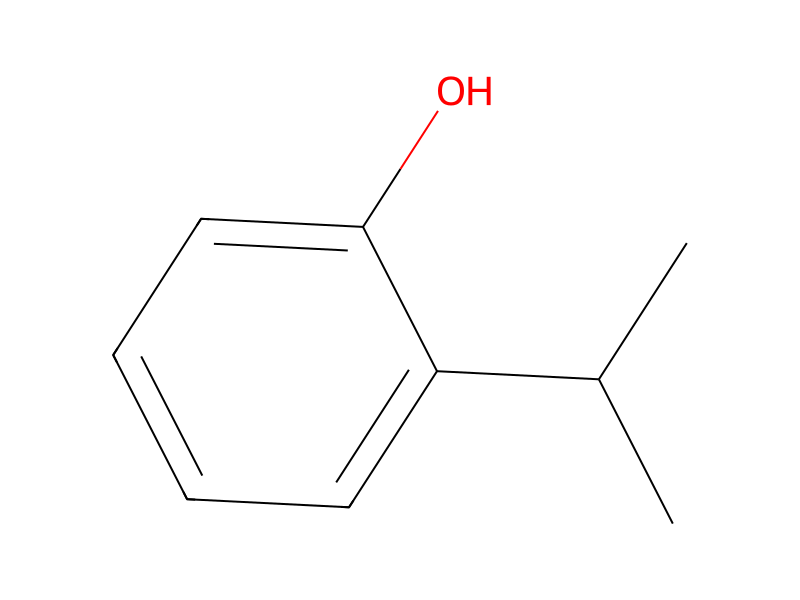
[CH:1]([C:4]1[CH:9]=[CH:8][CH:7]=[CH:6][C:5]=1O)([CH3:3])[CH3:2].[P:11](Cl)([Cl:14])([Cl:13])=[S:12].N1C=CC=CC=1>ClC=C(Cl)Cl>[CH:1]([C:4]1[CH:9]=[CH:8][CH:7]=[CH:6][C:5]=1[P:11]([Cl:14])([Cl:13])=[S:12])([CH3:3])[CH3:2]Participants
Reactant 3


Product 1

Reagents, catalysts & solvents 1

Procedure
A mixture of 2-iso-propylphenol (10.0 g, 73.4 mmol) in trichloroethylene (600 mL) is added dropwise to a 0°-4° C. mixture of thiophosphoryl chloride (18.63 g, 110 mmol) and anhydrous pyridine (8.70 g, 110 mmol) in trichloroethylene (250 mL) over a 1 hour period under a nitrogen atmosphere. The resultant reaction mixture is stirred at 0°-4° C. for 2 hours, is warmed to room temperature and then is stirred at room temperature for 12 hours. A white solid gradually precipitates. The white solid is filtered from the reaction mixture. The resultant reaction mixture is concentrated in vacuo to a residue. Successive aliquots of toluene (200 mL) are added to the residue and then separately evaporated in vacuo to give (2-iso-propylphenyl)-thiophosphoryl dichloride which can be used directly without further purification as the starting material for Example 27.
Workup
- additionis added dropwise to a 0°-4° C.
- customThe resultant reaction mixture
- stirringis stirred at room temperature for 12 hours
- customA white solid gradually precipitates
- filtrationThe white solid is filtered from the reaction mixture
- customThe resultant reaction mixture
- concentrationis concentrated in vacuo to a residue
- additionSuccessive aliquots of toluene (200 mL) are added to the residue
- customseparately evaporated in vacuo
Sources & evidence
- ORD record
- ord-3248356d38124bed9000c752f5ba10cb
- Source dataset
- uspto-grants-1998_09
- Patent number
- US05804569
Reaction notes
Loading…