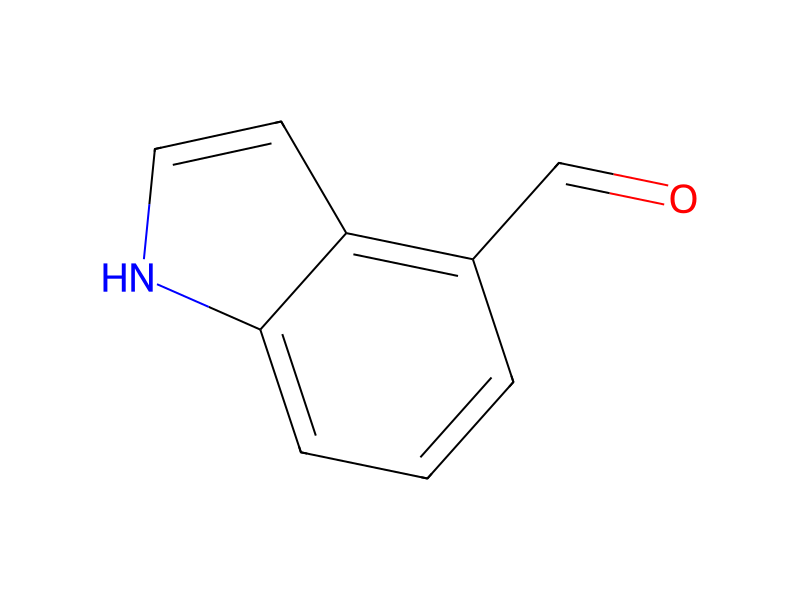
Indole-4-carboxaldehyde → HCID 18973289, compound
Reaction equation

[NH:1]1[C:9]2[CH:8]=[CH:7][CH:6]=[C:5]([CH:10]=[O:11])[C:4]=2[CH:3]=[CH:2]1.CS(O[CH2:17][C:18]1[CH:23]=[C:22]([O:24][CH3:25])[CH:21]=[C:20]([O:26][CH3:27])[CH:19]=1)(=O)=O>>[CH3:27][O:26][C:20]1[CH:19]=[C:18]([CH:23]=[C:22]([O:24][CH3:25])[CH:21]=1)[CH2:17][N:1]1[C:9]2[CH:8]=[CH:7][CH:6]=[C:5]([CH:10]=[O:11])[C:4]=2[CH:3]=[CH:2]1Participants
3


Procedure
The same procedures used in Example 1 were repeated except for using 725 mg of indole-4-carbaldehyde and 3,5-dimethoxybenzyl methanesulfonate instead of the benzyl bromide used in Example 1 to give 1.29 g of 1-(3,5-dimethoxybenzyl)indole-4-carbaldehyde as a pale brown amorphous substance. The yield thereof was found to be 86%.
Sources & evidence
- ORD record
- ord-e696bbd1e4134e509034839442ac0b73
- Source dataset
- uspto-grants-1998_09
- Patent number
- US05811439
Reaction notes
Loading…