Glycine → (3-Hydroxy-2-methyl-4-oxopyridin-1(4H)-yl)acetic acid
Reaction equation

[OH:1][C:2]1[C:7](=[O:8])[CH:6]=[CH:5]O[C:3]=1[CH3:9].[NH2:10][CH2:11][C:12]([OH:14])=[O:13].[OH-].[Na+]>CO>[C:12]([CH2:11][N:10]1[CH:5]=[CH:6][C:7](=[O:8])[C:2]([OH:1])=[C:3]1[CH3:9])([OH:14])=[O:13]Participants
Reactant 3
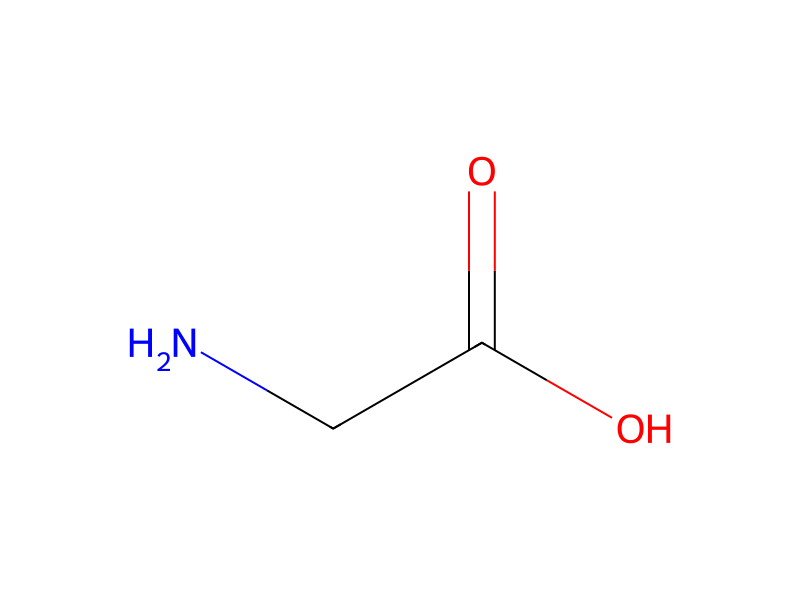


Product 1

Reagents, catalysts & solvents 1

Conditions
- Temperature
- 60 °C
Procedure
3-hydroxy-2-methyl-4-pyrone (15 g) in methanol (250 ml) is added to an aqueous mixture (200 ml) containing glycine (7.7 g) and sodium hydroxide (10 g) with pH adjusted to 11.0, heated to 60° C. and kept with stirring under reflux conditions for 48 h. The mixture is rotary evaporated to oily residue which is made up to 100 ml with water and extracted (2×) with equal volumes of ethyl acetate. The aqueous fraction acidified with HCl to pH 1.8 to give an almost white precipitate with a yellowish hue, the desired compound. After filtration and drying the powdery compound is insoluble in water, but it is soluble in dilute base (pH 9). The mass spectrum showed a molecular ion mass M+=186.2 consistent with 1-carboxymethyl-3-hydroxy-2-methyl-pyrid-4-one. The compound reacts with iron to form the purple coloured iron-ligand complex indicating the presence of the 3-hydroxypyrid-4-one chelating moiety. TLC showed single a band separate and of lower rf than the 3-hydroxy-2-methyl-4-pyrone control. HPLC analysis of a mixture of 3-hydroxy-2-methyl-4-pyrone control and synthetic end product showed two sharp peaks with retention times of control=5.8 min. and sample=15.2 min.
Workup
- customThe mixture is rotary evaporated to oily residue which
- extractionextracted (2×) with equal volumes of ethyl acetate
- customto give an almost white precipitate with a yellowish hue
Sources & evidence
- ORD record
- ord-6931943652f942508fdfe8c595e2cfb5
- Source dataset
- uspto-grants-1998_09
- Patent number
- US05814614
Reaction notes
Loading…