Benzene → HCID 86749248, compound
Reaction equation

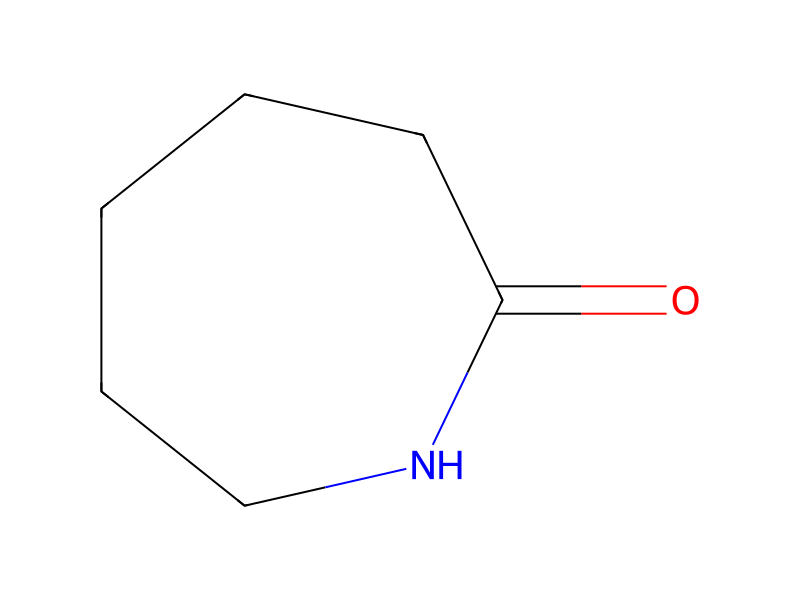
[N+:1]([C:4]1[CH:12]=[CH:11][C:7]([C:8](Cl)=[O:9])=[CH:6][CH:5]=1)([O-:3])=[O:2].[C:13]1(=[O:20])[NH:19][CH2:18][CH2:17][CH2:16][CH2:15][CH2:14]1.C1C=CC=CC=1>N1C=CC=CC=1>[N+:1]([C:4]1[CH:12]=[CH:11][C:7]([C:8]([CH:14]2[CH2:15][CH2:16][CH2:17][CH2:18][NH:19][C:13]2=[O:20])=[O:9])=[CH:6][CH:5]=1)([O-:3])=[O:2]Participants
Reactant 3


Product 1

Reagents, catalysts & solvents 1

Procedure
A mixture of 4-nitrobenzoyl chloride (50.16 g, 0.27 mol), freshly distilled ε-caprolactam (30.59 g, 0.27 mol), and 500 ml of benzene are added to a 1L three-necked round-bottom flask equipped with an overhead stirrer, condenser and a nitrogen inlet tube. The solution is heated to 90°-100° C. and after all the solids are dissolved, 160 ml of pyridine is added. White pyridine salts form immediately, the reaction solution being kept at 90°-100° C. for 1 hour. The pyridine salts are removed by filtration, and the solvent is separated from the filtrate under reduced pressure. The residue is washed with a 5 percent NaHCO3 aqueous solution and with distilled water several times before being dried. The product is then recrystallized from a mixture of ethyl acetate and hexane to obtain 67 g (95 percent) of white crystals: mp 105°-106° C.
Workup
- customequipped with an overhead stirrer, condenser and a nitrogen inlet tube
- temperatureThe solution is heated to 90°-100° C.
- dissolutionafter all the solids are dissolved
- customThe pyridine salts are removed by filtration
- customthe solvent is separated from the filtrate under reduced pressure
- washThe residue is washed with a 5 percent NaHCO3 aqueous solution and with distilled water several times
- custombefore being dried
- customThe product is then recrystallized from a mixture of ethyl acetate and hexane
Sources & evidence
- ORD record
- ord-ff337b0319814f64bf210857806b9a0e
- Source dataset
- uspto-grants-1996_02
- Patent number
- US05491200
Reaction notes
Loading…