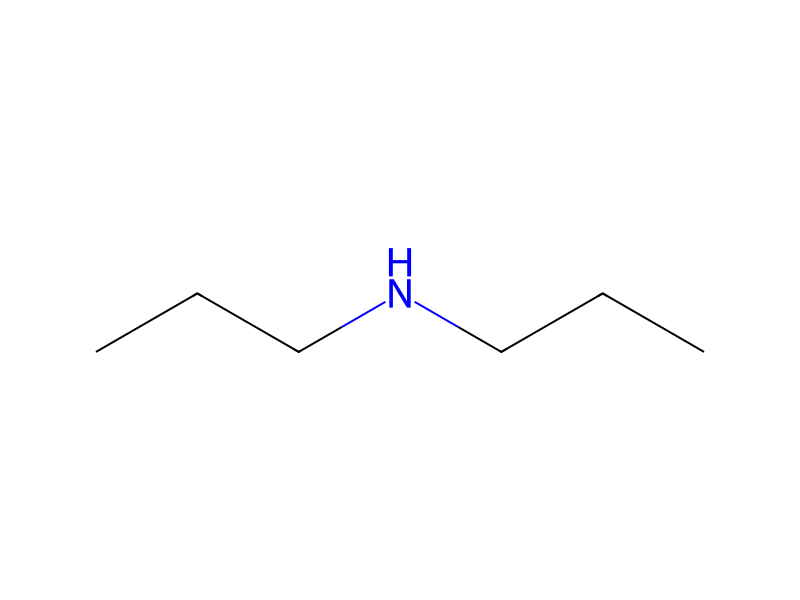
Dipropylamine → HCID 10738132, compound
Reaction equation

[Cl:1][C:2]1[CH:7]=[CH:6][C:5]([O:8][CH2:9][CH2:10][C:11]2[CH:16]=[CH:15][CH:14]=[CH:13][CH:12]=2)=[C:4]([CH2:17][CH2:18][CH2:19]Cl)[CH:3]=1.[CH2:21]([NH:24][CH2:25][CH2:26][CH3:27])[CH2:22][CH3:23]>C(Cl)Cl>[CH2:21]([N:24]([CH2:19][CH2:18][CH2:17][C:4]1[CH:3]=[C:2]([Cl:1])[CH:7]=[CH:6][C:5]=1[O:8][CH2:9][CH2:10][C:11]1[CH:16]=[CH:15][CH:14]=[CH:13][CH:12]=1)[CH2:25][CH2:26][CH3:27])[CH2:22][CH3:23]Participants
4
Reactant 2

Product 1

Reagents, catalysts & solvents 1

Conditions
- Temperature
- 120 °C
Procedure
To 604 mg of the crude 4-chloro-2-(3-chloropropyl)-1-(2-phenylethoxy)benzene, was added 5 ml of di-n-propylamine and the resulting mixture was stirred at 120° C. for 39 hours. After diluting with methylene chloride, the mixture was successively washed with a saturated aqueous solution of sodium hydrogencarbonate and a saturated aqueous solution of sodium chloride and dried over anhydrous magnesium sulfate. After evaporation of the solvent under reduced pressure, the obtained residue was subjected to silica gel column chromatography (developing solvent; ethyl acetate:n-hexane =1:5) to give 0.50 g of N,N-di-n-propyl-3-[5-chloro-2-(2-phenylethoxy)phenyl]propylamine.
Workup
- washthe mixture was successively washed with a saturated aqueous solution of sodium hydrogencarbonate
- dry with materiala saturated aqueous solution of sodium chloride and dried over anhydrous magnesium sulfate
- customAfter evaporation of the solvent under reduced pressure
Sources & evidence
- ORD record
- ord-4fdee473e5b54a5682e8b4c8cf274d50
- Source dataset
- uspto-grants-1996_02
- Patent number
- US05495046
Reaction notes
Loading…