Lauric Acid → Silver laurate
Reaction equation

[OH-].[Na+].[C:3]([OH:16])(=[O:15])[CH2:4][CH2:5][CH2:6][CH2:7][CH2:8][CH2:9][CH2:10][CH2:11][CH2:12][CH2:13][CH3:14].[N+]([O-])([O-])=O.[Ag+:21]>O.C1(C)C=CC=CC=1>[C:3]([O-:16])(=[O:15])[CH2:4][CH2:5][CH2:6][CH2:7][CH2:8][CH2:9][CH2:10][CH2:11][CH2:12][CH2:13][CH3:14].[Ag+:21]Participants
6
Reactant 3
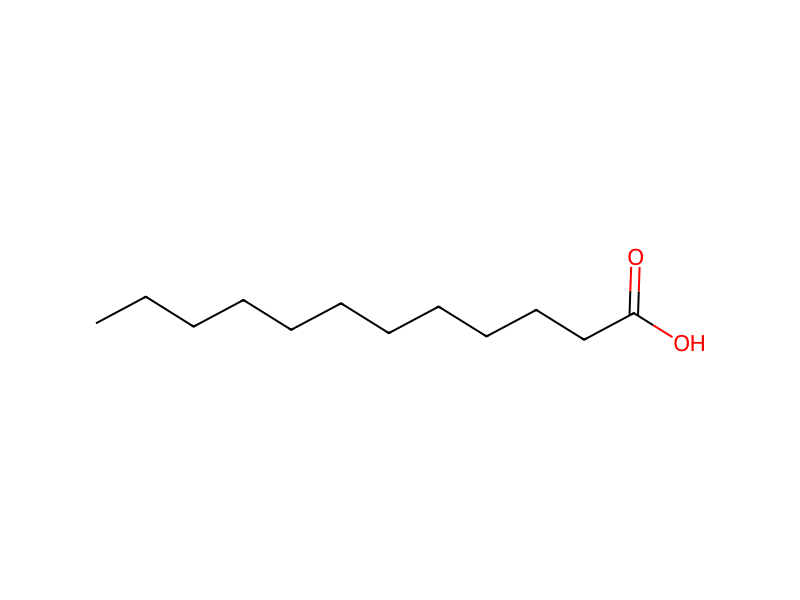


Product 1

Reagents, catalysts & solvents 2


Procedure
1.9 g of sodium hydroxide was dissolved in 100 ml of water, with which 12 g of lauric acid in 100 ml of toluene was mixed to emulsify (at 25° C.). An aqueous solution of 8.5 g of silver nitrate dissolved in 50 ml of water was then added to the above emulsion, which resulted in separation into a silver laurate-containing toluene phase and an aqueous phase. After removal of the aqueous phase, the toluene phase was dispersed into 200 ml of ethanol, and then, silver laurate was collected by centrifuging. 12 g of spindle-like silver laurate crystals of a longer diameter of about 3 μ was obtained.
Workup
- additionwas mixed
- custom(at 25° C.)
- additionwas then added to the above emulsion, which
Sources & evidence
- ORD record
- ord-595ae7f63ffc4febb5ee66b460d1452f
- Source dataset
- uspto-grants-1977_05
- Patent number
- US04021249
Reaction notes
Loading…