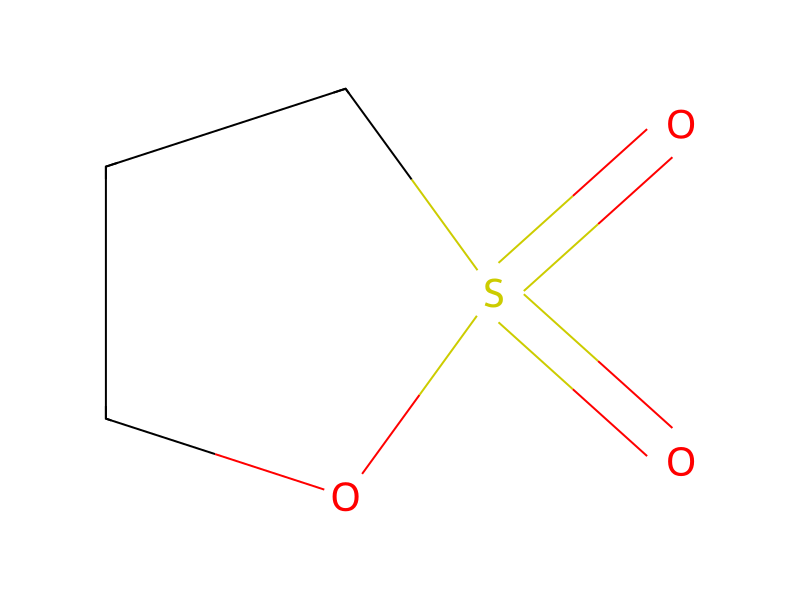
Propane sultone → AGN-PC-0NGQFE
Reaction equation

[N+:1]([C:4]1[CH:9]=[CH:8][C:7]([N:10]2[CH2:15][CH2:14][NH:13][CH2:12][CH2:11]2)=[CH:6][CH:5]=1)([O-:3])=[O:2].[CH2:16]1[CH2:22][S:19](=[O:21])(=[O:20])[O:18][CH2:17]1>CC(C)=O>[N+:1]([C:4]1[CH:5]=[CH:6][C:7]([N:10]2[CH2:15][CH2:14][N:13]([CH2:17][CH2:16][CH2:22][S:19]([OH:21])(=[O:20])=[O:18])[CH2:12][CH2:11]2)=[CH:8][CH:9]=1)([O-:3])=[O:2]Participants
4
Reactant 2

Product 1

Reagents, catalysts & solvents 1

Procedure
To a solution of 1-(4-nitrophenyl)piperazine (2.58 g, 12.1 mmol) in acetone (25 mL) was added 1,3-propane sultone (1.06 g, 8.6 mmol). The mixture was stirred at reflux for 2 h. The reaction was cooled to room temperature. The solid was collected by filtration, washed with acetone (2×25 mL) and dried in vacuo. This allowed the isolation of compound N, 2.85 g (71%).
Workup
- temperatureat reflux for 2 h
- filtrationThe solid was collected by filtration
- washwashed with acetone (2×25 mL)
- customdried in vacuo
Sources & evidence
- ORD record
- ord-7ee78b06947e4a29b42ac8bace5532bf
- Source dataset
- uspto-grants-2014_02
- Patent number
- US08642801B2
Reaction notes
Loading…