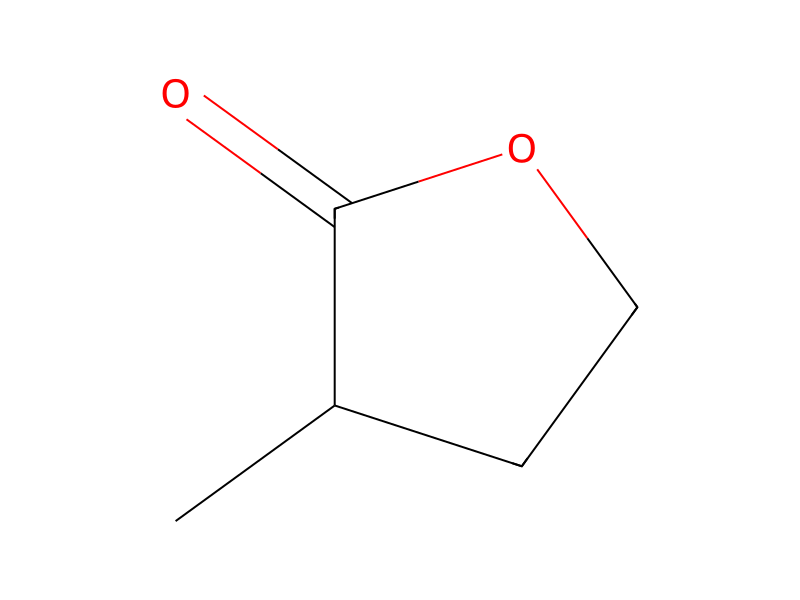
alpha-Methylbutyrolactone → HCID 12365954, compound
Reaction equation

[CH3:1][CH:2]1[CH2:7][CH2:6][O:5][C:3]1=[O:4].ClCCC(C)C(Cl)=O.[Cl:16][C:17]1[CH:26]=[C:21]([C:22]([NH:24]O)=[O:23])[C:20](O)=[CH:19][CH:18]=1>>[Cl:16][C:17]1[CH:18]=[CH:19][C:20]2[O:4][CH:3]3[CH:2]([CH3:1])[CH2:7][CH2:6][O:5][N:24]3[C:22](=[O:23])[C:21]=2[CH:26]=1Participants
4


Procedure
40 g. of 2-methylbutyrolactone was converted to 45 g. of 4-chloro-2-methylbutryl chloride (b.p. 70°-72° C at 15 mm.) by the method detailed in Example 4. The acid chloride (15.5 g.) was reduced to the corresponding aldehyde, condensed with 5-chlorosalicylhydroxamic acid and the resulting intermediate was ring-closed according to the method described in Example 3. The product melted at 144°-146° C. after recrystallization from a mixture of trichloroethylene and hexane.
Workup
- customthe resulting intermediate was ring-closed
- customThe product melted at 144°-146° C. after recrystallization
- additionfrom a mixture of trichloroethylene and hexane
Sources & evidence
- ORD record
- ord-641e9c3ddcde4f4381bf9ba1edd5cfa3
- Source dataset
- uspto-grants-1977_05
- Patent number
- US04024139
Reaction notes
Loading…