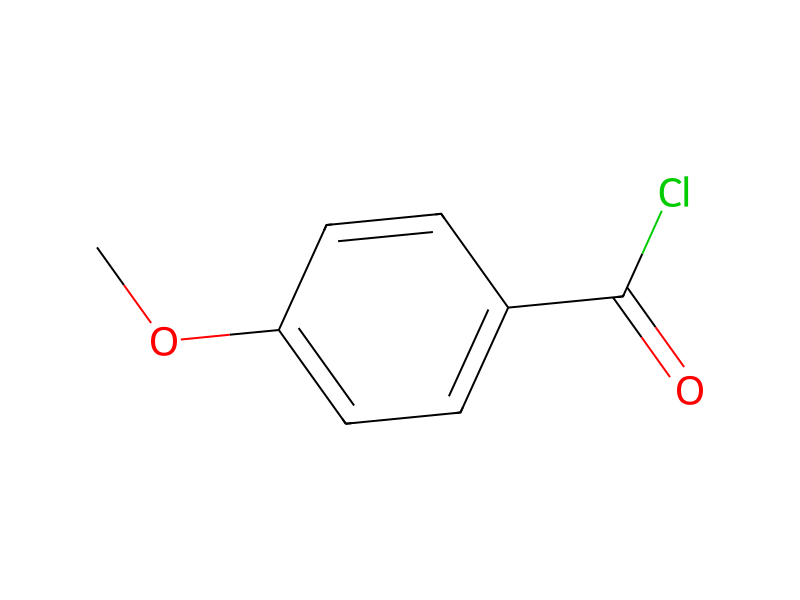
p-Anisoyl chloride → HCID 21433227, compound
Reaction equation

[NH2:1][C:2]1[CH:7]=[C:6]([C:8]([F:11])([F:10])[F:9])[C:5]([Br:12])=[CH:4][C:3]=1[S:13]([NH2:16])(=[O:15])=[O:14].[C:17](Cl)(=[O:26])[C:18]1[CH:23]=[CH:22][C:21]([O:24][CH3:25])=[CH:20][CH:19]=1>>[C:17]([NH:1][C:2]1[CH:7]=[C:6]([C:8]([F:9])([F:11])[F:10])[C:5]([Br:12])=[CH:4][C:3]=1[S:13]([NH2:16])(=[O:14])=[O:15])(=[O:26])[C:18]1[CH:23]=[CH:22][C:21]([O:24][CH3:25])=[CH:20][CH:19]=1Participants
3


Procedure
2-Amino-4-trifluoromethyl-5-bromo-benzenesulfonamide (formula (V): R2 = Br) is first prepared according to the above-described technique. M.p.= 202° C. The 2-amino-4-trifluoromethyl-5-bromobenzenesulfonamide (9.60 g) is then reacted, as in Example 2A, with p-anisic acid chloride (6.8 g), to give 12.2 g 2-p-anisoylamino-4-trifluoromethyl-5-bromo-benzenesulfonamide, M.p.= 321° C.
Sources & evidence
- ORD record
- ord-9cb1bd12b84343c8a2309c37984764f9
- Source dataset
- uspto-grants-1977_05
- Patent number
- US04025508
Reaction notes
Loading…