Pyridine → Carbamic acid, [6-(trifluoromethyl)-3-pyridinyl]-, phenyl ester
Reaction equation

N1C=CC=CC=1.[F:7][C:8]([F:17])([F:16])[C:9]1[CH:14]=[CH:13][C:12]([NH2:15])=[CH:11][N:10]=1.Cl[C:19]([O:21][C:22]1[CH:27]=[CH:26][CH:25]=[CH:24][CH:23]=1)=[O:20]>C(Cl)(Cl)Cl>[C:22]1([O:21][C:19](=[O:20])[NH:15][C:12]2[CH:11]=[N:10][C:9]([C:8]([F:7])([F:16])[F:17])=[CH:14][CH:13]=2)[CH:27]=[CH:26][CH:25]=[CH:24][CH:23]=1Participants
5
Reactant 3

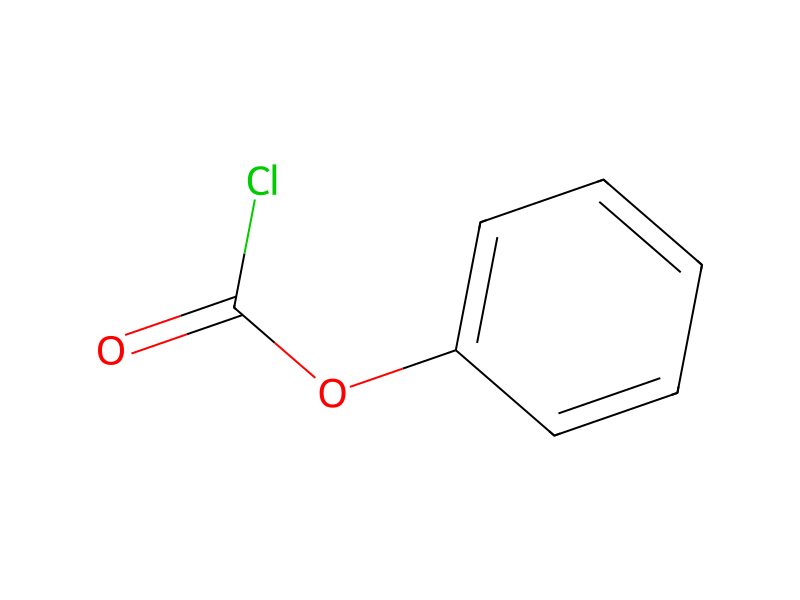

Product 1

Reagents, catalysts & solvents 1

Procedure
Pyridine (2.9 mL) was added to a solution of 2-trifluoromethyl-5-aminopyridine (1.95 g) in chloroform (15 mL), the mixture was cooled in ice, and phenyl chloroformate (1.8 mL) was added thereto. The resulting mixture was stirred at room temperature overnight, and the reaction mixture was concentrated under reduced pressure. The residue was washed with isopropyl ether to afford phenyl[6-(trifluoromethyl)pyridin-3-yl]carbamate (2.16 g).
Workup
- temperaturethe mixture was cooled in ice
- concentrationthe reaction mixture was concentrated under reduced pressure
- washThe residue was washed with isopropyl ether
Sources & evidence
- ORD record
- ord-5d1832adacc84cc5a9b528ac0e14cb03
- Source dataset
- uspto-grants-2014_08
- Patent number
- US08796272B2
Reaction notes
Loading…