Acetic Acid → Allyl Alcohol
Reaction equation

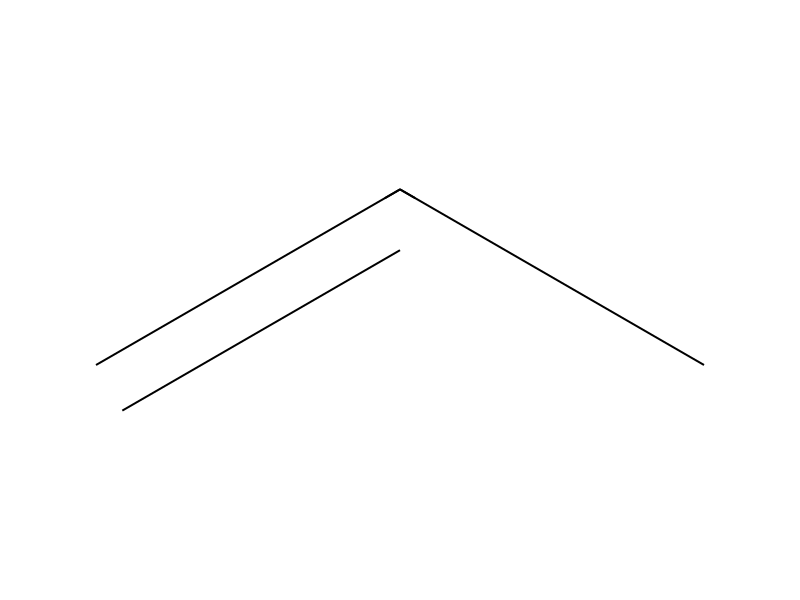
O=O.[CH2:3]=[CH:4][CH3:5].[C:6]([OH:9])(=[O:8])[CH3:7]>>[CH2:3]([OH:8])[CH:4]=[CH2:5].[C:6]([O:9][CH2:3][CH:4]=[CH2:5])(=[O:8])[CH3:7]Participants




Procedure
FIG. 2 shows a process further including a step of producing an aqueous 70% by mass allyl alcohol solution by hydrolyzing allyl acetate produced using a hydrolysis reactor 24. When allyl acetate produced by reacting oxygen, acetic acid and propylene is subsequently hydrolyzed to produce allyl alcohol, allyl acetate separated and distilled by the first distillation column 9 shown in FIG. 1 may be fed to the hydrolysis reactor. In the example of FIG. 2, a reaction mixed liquid (a bottom liquid 14 of a gas-liquid separator column) is fed through a middle tank 7 to a hydrolysis reactor 24 without separating and purifying allyl acetate. In FIG. 2, 26 denotes a second distillation column, and a reaction liquid 25 from the hydrolysis reactor 24 is distilled and separated into a bottom liquid of a second distillation column, and a top liquid 27 of a second distillation column. A bottom liquid of a second distillation column contains an acetic acid (comprising the unreacted acetic acid and acetic acid produced by hydrolysis), water and the other high-boiling point components. A top liquid 27 of a second distillation column is a mixture of allyl alcohol, allyl acetate and water.
Sources & evidence
- ORD record
- ord-573a3fbef5164cc4a4daf2286e236079
- Source dataset
- uspto-grants-2014_08
- Patent number
- US08802889B2
Reaction notes
Loading…