Hydroxyphenylacetic acid → Pterostilbene
Reaction equation

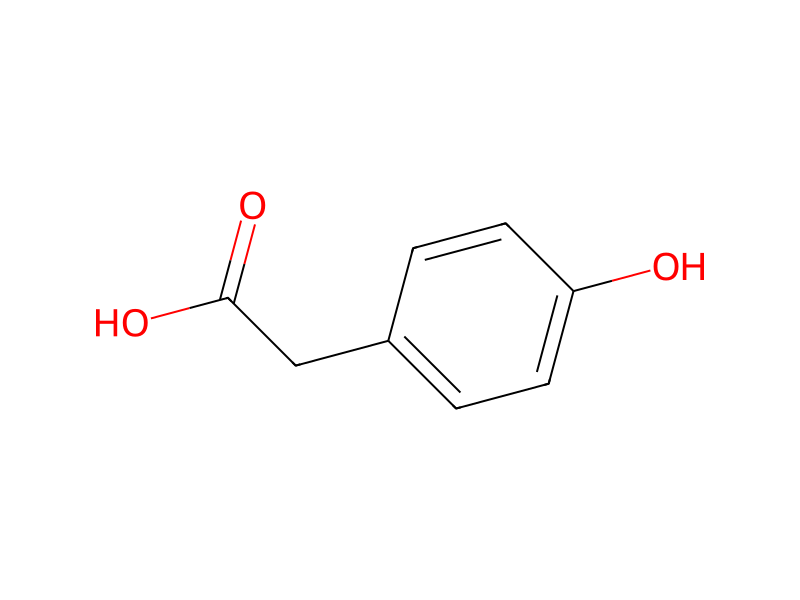
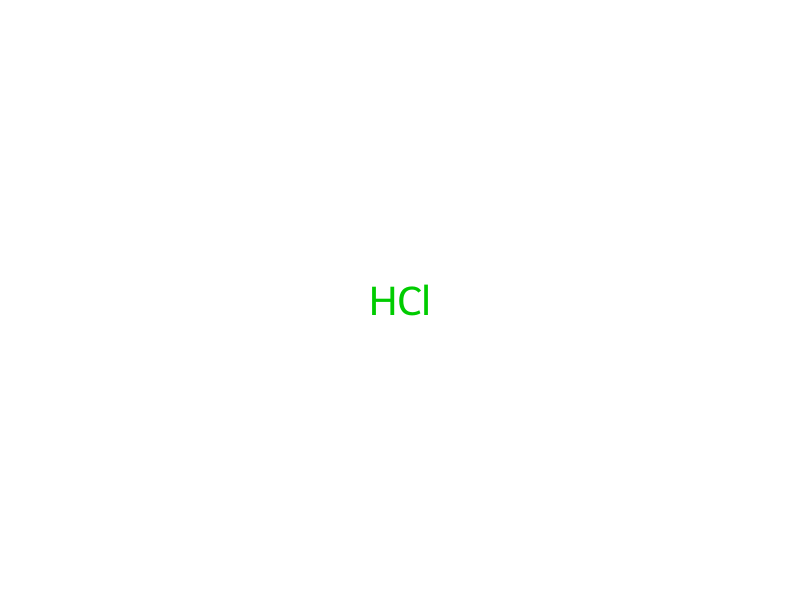
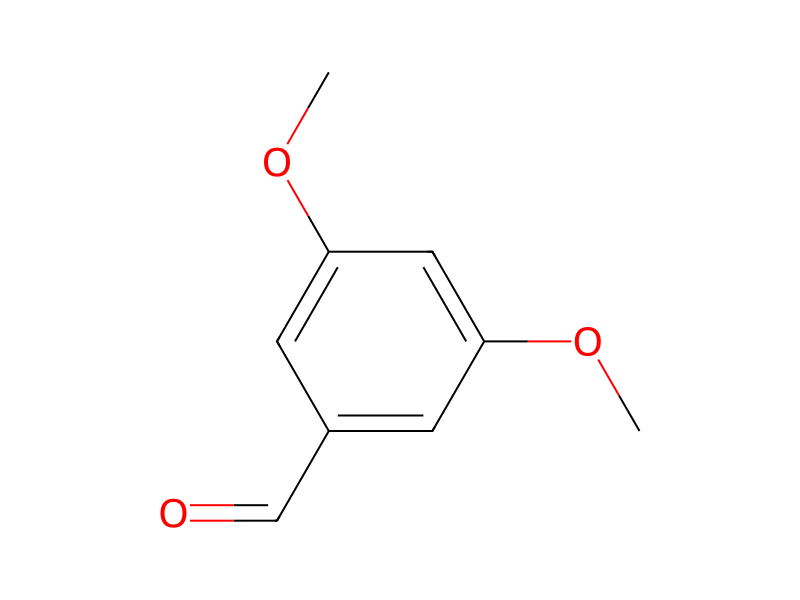
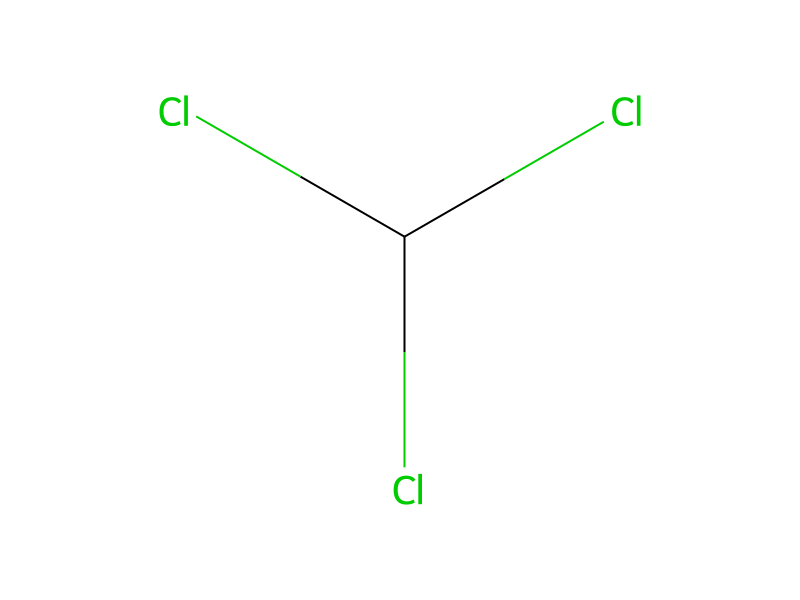
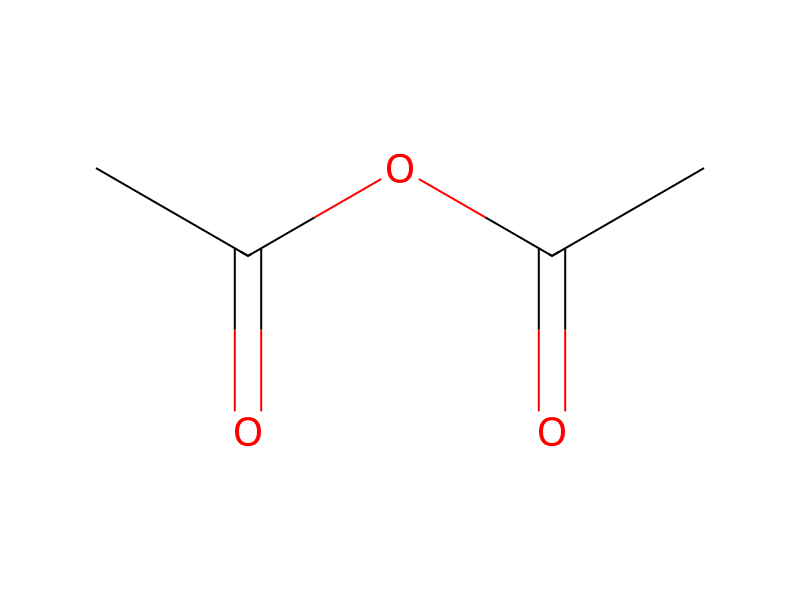
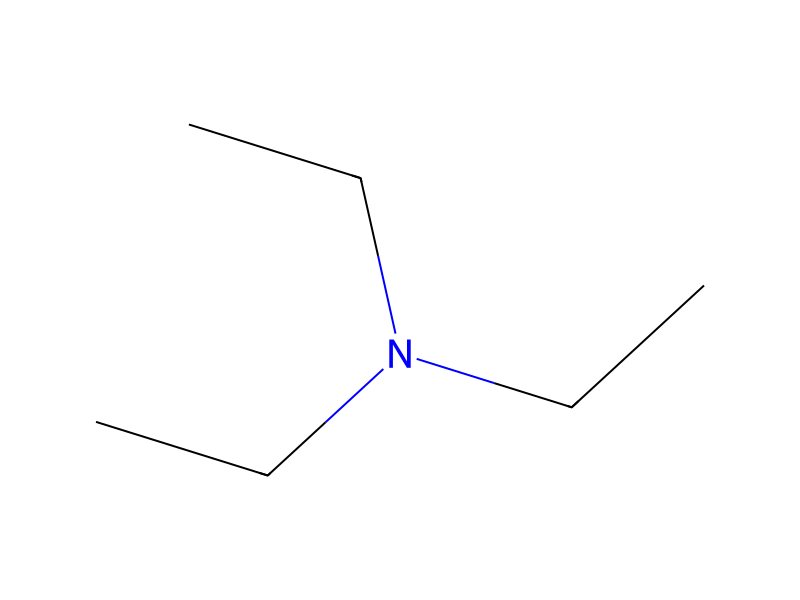
[CH3:1][O:2][C:3]1[CH:4]=[C:5]([CH:8]=[C:9]([O:11][CH3:12])[CH:10]=1)[CH:6]=O.[OH:13][C:14]1[CH:19]=[CH:18][C:17]([CH2:20][C:21]([OH:23])=[O:22])=[CH:16][CH:15]=1.Cl>C(OC(=O)C)(=O)C.C(N(CC)CC)C.C(Cl)(Cl)Cl>[CH3:1][O:2][C:3]1[CH:10]=[C:9]([O:11][CH3:12])[CH:8]=[C:5](/[CH:6]=[CH:20]/[C:17]2[CH:16]=[CH:15][C:14]([OH:13])=[CH:19][CH:18]=2)[CH:4]=1.[CH3:1][O:2][C:3]1[CH:4]=[C:5](/[CH:6]=[C:20](/[C:17]2[CH:18]=[CH:19][C:14]([OH:13])=[CH:15][CH:16]=2)\[C:21]([OH:23])=[O:22])[CH:8]=[C:9]([O:11][CH3:12])[CH:10]=1Participants
Reactant 3
Product 2


Reagents, catalysts & solvents 3
Conditions
- Temperature
- 150 °C
Procedure
Pterostilbene (trans-3,5-dimethoxy-4′-hydroxystilbene) was synthesized (as modified from Pettit et al., 1988, J. Nat. Prod. 51:517-527) by condensation of 3,5-dimethoxybenzaldehyde and 4-hydroxyphenylacetic acid in acetic anhydride and triethylamine. The reaction mixture was heated (150° C.) under an atmosphere of nitrogen, and continuously stirred. After 20 hours, the reaction was stopped, cooled to room temperature, and concentrated hydrochloric acid (5 mL) was added. The formed precipitate was dissolved in 50 mL chloroform and extracted with 10% aqueous sodium hydroxide. The aqueous extract was acidified to pH 1 with concentrated hydrochloric acid, and stirred for at least 6 hours, resulting in the precipitation of the intermediate product, α-[(3,5-dimethoxyphenyl)methylene]-4-hydroxy-(αZ)-benzeneacetic acid. This intermediate product was heated with 1.0 g of copper in 10 mL quinoline (200° C., 6 hours, under nitrogen). The reaction mixture was cooled to room temperature and filtered. 5 N hydrochloric acid (25 mL) was added to filtrate, stirred for 1 hour, and extracted with chloroform. The chloroform extract containing impure pterostilbene was purified by flash chromatography on a Horizon HPFC system (Biotage, Inc., Charlottesville, Va.), using silica gel column, and solvent system ethyl acetate:hexane (linear gradient from 15:85 to 100% ethyl acetate). Fractions containing pure pterostilbene were combined and concentrated in vacuum. Pterostilbene was recrystallized in hexane, and its structure confirmed from its spectroscopic data (UV, mass spectrometry, and nuclear magnetic resonance spectroscopy).
Workup
- temperaturecooled to room temperature
- extractionextracted with 10% aqueous sodium hydroxide
- extractionThe aqueous extract
- stirringstirred for at least 6 hours
Sources & evidence
- ORD record
- ord-e158f752443c47928785a3e7d8cb5af4
- Source dataset
- uspto-grants-2014_08
- Patent number
- US08809400B2
Reaction notes
Loading…