Tetrafluoroborate → 2-(4-Trifluoromethyl-phenyl)-pyrimidine-5-carbaldehyde
Reaction equation

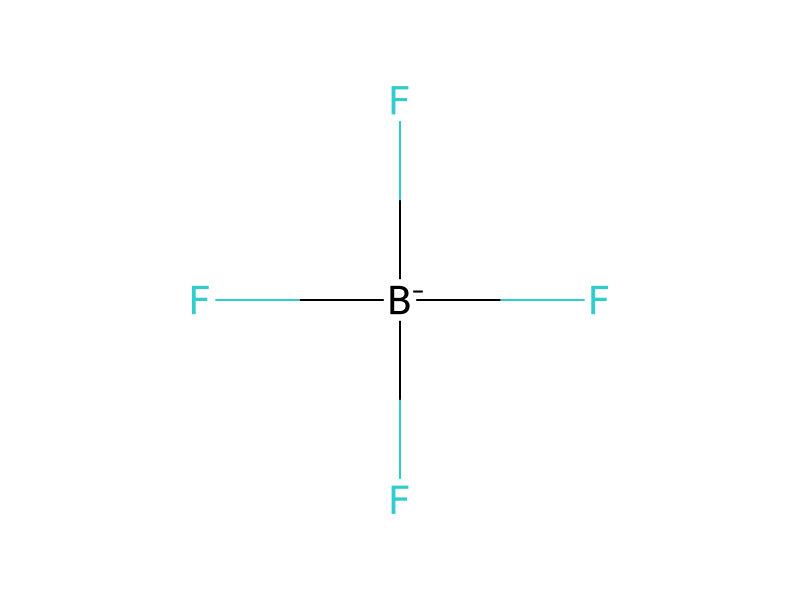
Cl.[F:2][C:3]([F:14])([F:13])[C:4]1[CH:12]=[CH:11][C:7]([C:8](=[NH:10])[NH2:9])=[CH:6][CH:5]=1.CN([CH:18]=[C:19]([CH2:24][NH+](C)C)[CH2:20][NH+](C)C)C.F[B-](F)(F)F.C[O-:34].[Na+]>C(O)C>[F:2][C:3]([F:13])([F:14])[C:4]1[CH:12]=[CH:11][C:7]([C:8]2[N:9]=[CH:20][C:19]([CH:24]=[O:34])=[CH:18][N:10]=2)=[CH:6][CH:5]=1Participants
6
Reactant 4



Product 1

Reagents, catalysts & solvents 1

Conditions
- Temperature
- 90 °C
Procedure
To a solution of containing 4-(trifluoromethyl)benzimidamide hydrochloride (50 g, 0.22 mol) and 2-dimethylaminomethylene-1,3-bis(dimethylammonio)propane bis(tetrafluoroborate (50 g, 0.27 mol) in ethanol (500 mL) was added sodium methoxide (36 g, 0.67 mol). The mixture was stirred for 1 h at 90° C. then cooled to room temperature. The mixture was extracted with ethyl acetate (200 mL*3). The organic layer was dried over Na2SO4, filtered and concentrated under reduced pressure. The crude product was purified via silica gel chromatography to give 2-(4-(trifluoromethyl)phenyl)pyrimidine-5-carbaldehyde (25 g) as a colorless solid. 1H NMR (400 MHz, CDCl3) δ 10.12 (s, 1H), 9.19 (s, 2H), 8.61 (d, J=8.0 Hz, 2H), 7.72 (d, J=8 Hz, 2H).
Workup
- temperaturethen cooled to room temperature
- extractionThe mixture was extracted with ethyl acetate (200 mL*3)
- dry with materialThe organic layer was dried over Na2SO4
- filtrationfiltered
- concentrationconcentrated under reduced pressure
- customThe crude product was purified via silica gel chromatography
Sources & evidence
- ORD record
- ord-56f2a94b17174ade8f62e8833b014d82
- Source dataset
- uspto-grants-2014_08
- Patent number
- US08809342B2
Reaction notes
Loading…