Potassium Iodide → 2-Fluoro[1,1'-biphenyl]-4-carbonitrile
Reaction equation

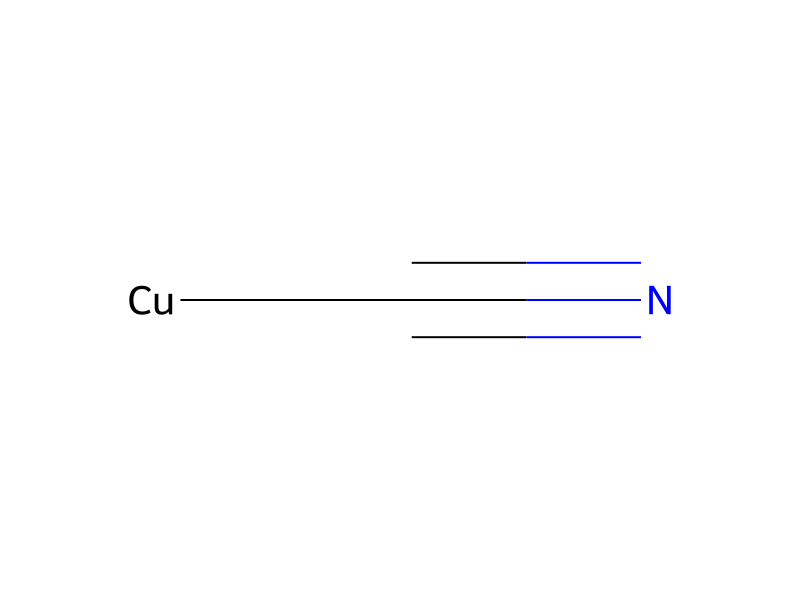
[Cu][C:2]#[N:3].[I-].[K+].Br[C:7]1[CH:12]=[CH:11][C:10]([C:13]2[CH:18]=[CH:17][CH:16]=[CH:15][CH:14]=2)=[C:9]([F:19])[CH:8]=1>N1C=CC=CC=1>[F:19][C:9]1[CH:8]=[C:7]([C:2]#[N:3])[CH:12]=[CH:11][C:10]=1[C:13]1[CH:14]=[CH:15][CH:16]=[CH:17][CH:18]=1Participants
5
Reactant 3


Product 1

Reagents, catalysts & solvents 1

Conditions
- Temperature
- 151 °C
Procedure
Copper (I) cyanide (10.69 g, 0.12 mol) and potassium iodide (6.21 g, 0.037 mol) are added to a stirred pyridine solution (10 mL) of 4-bromo-2-fluorobiphenyl (10 g, 0.040 mol). The reaction mixture is heated at 150-152° C., 5 mL pyridine is distilled out and heating is continued at 150-152° C. for 24 hrs. The reaction mixture is cooled to 95-1000, toluene (100 mL) is added to it. It is cooled to 35-40° C. and an aqueous ammonia solution (25%, 100 mL) is added. After stirring for half an hour, toluene layer is separated and washed with aqueous ammonia solution (2×50 mL), then demineralized water (3×100 mL). The toluene layer is charcoalized and concentrated to give 2-fluorobiphenyl-4-carbonitrile.
Workup
- distillation5 mL pyridine is distilled out and
- temperatureheating
- temperatureThe reaction mixture is cooled to 95-1000, toluene (100 mL)
- additionis added to it
- temperatureIt is cooled to 35-40° C.
- additionan aqueous ammonia solution (25%, 100 mL) is added
- customtoluene layer is separated
- washwashed with aqueous ammonia solution (2×50 mL)
- concentrationconcentrated
Sources & evidence
- ORD record
- ord-b31fe268a6fd48618035d557add75685
- Source dataset
- uspto-grants-2014_08
- Patent number
- US08809539B2
Reaction notes
Loading…