Bromide ion → HCID 86652237, compound
Reaction equation

[CH3:1][Si:2]([C:5]#[C:6][SiH:7]([CH:11]([CH3:13])[CH3:12])[CH:8]([CH3:10])[CH3:9])([CH3:4])[CH3:3].[Br-:14]>Cl[Pd]Cl.C(Br)C=C>[CH3:4][Si:2]([C:5]#[C:6][Si:7]([CH:11]([CH3:13])[CH3:12])([CH:8]([CH3:9])[CH3:10])[Br:14])([CH3:1])[CH3:3]Participants
5
Reactant 2


Product 1

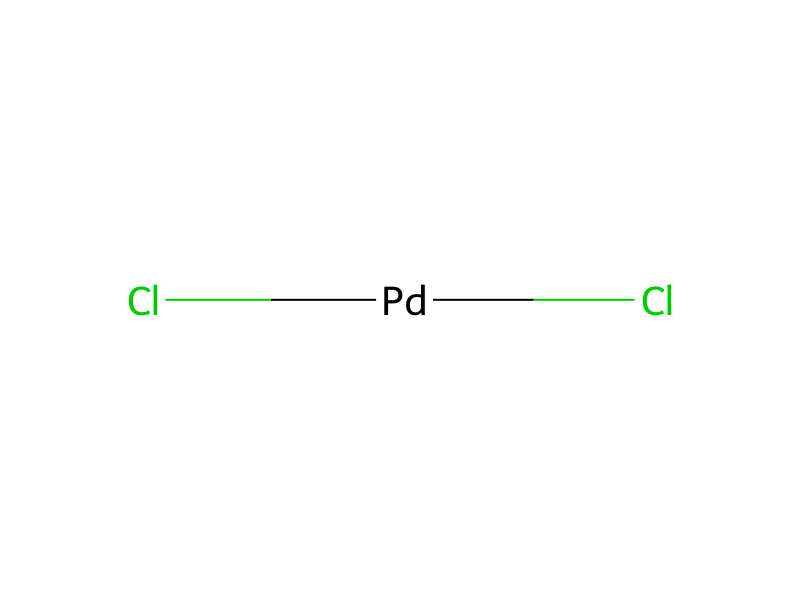
Reagents, catalysts & solvents 2

Conditions
- Temperature
- 60 °C
Procedure
(Trimethylsilylethynyl)diisopropylsilane (14 g, 66 mmol) and allyl bromide (˜40 mL) were added to a round-bottom flask equipped with a stir-bar. A septum and bubbler were attached and the solution was purged with N2 for 15 min. PdCl2 (0.06 g, 0.3 mmol, 0.5 mol %) was added and the reaction was heated at 60° C. for 3 hours, or until analysis by GC-MS showed complete conversion to the bromide. After removing the reaction from the heat, pentane (50 mL) was added and the solution was chilled for 20 min. The PdCl2 was removed by filtration through a fine fitted funnel, then solvent was removed using a rotary evaporator, yielding 18.8 g of (trimethylsilylethynyl)diisopropylbromosilane as a light brown liquid.
Workup
- customequipped with a stir-bar
- customthe solution was purged with N2 for 15 min
- customAfter removing
- customthe reaction from the heat, pentane (50 mL)
- additionwas added
- temperaturethe solution was chilled for 20 min
- customThe PdCl2 was removed by filtration through a fine fitted funnel
- customsolvent was removed
- customa rotary evaporator
Sources & evidence
- ORD record
- ord-df19251f67504e879297feadbfe5ceec
- Source dataset
- uspto-grants-2014_08
- Patent number
- US08809568B2
Reaction notes
Loading…