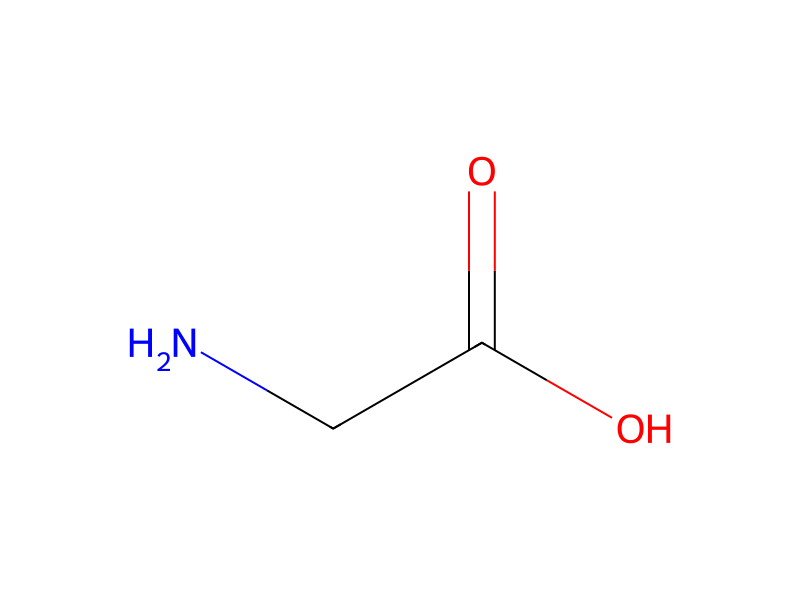
L-Alanine → Glycine
Reaction equation

[NH2:1][C@H:2]([C:9]([OH:11])=[O:10])CC1N=CNC=1.[NH2:12][C@H:13]([C:15]([OH:17])=[O:16])[CH3:14]>>[NH2:12][C@H:13]([C:15]([OH:17])=[O:16])[CH2:14][C:9]([OH:11])=[O:10].[NH2:1][CH2:2][C:9]([OH:11])=[O:10]Participants



Procedure
To study the effect of other amino acid residues at the ligation junction in exSAL, the glycopeptide-peptide thioester pairs shown below were examined. Glycopeptides containing N-terminal histidine and aspartic acid residues were synthesized by SPPS (Fmoc strategy). These were reacted with peptide thioesters containing C-terminal glycine, histidine and alanine residues under the mixed solvent system. The ligation between glycopeptide 44 and the peptide thioester 49 bearing a C-terminal glycine gave an isolated yield of 86% (entry 1 above). The peptide thioester containing a C-terminal histidine residue ligated in good yield (70%, entry 2 below) in accord with the previously reported SAL method. By increasing the steric bulk of the C-terminal amino acid of the thioester component, the ligation efficiency substantially decreased (44% for Ala-Gly, entry 3 below). Remarkable ligation yields were achieved for glycopeptides which bear an N-terminal aspartic acid residue. The isolated ligation yield which utilized this glycopeptide exceeded those for the glycine glycopeptide 44 (64-91% yield, entries 7-9 below). Suprisingly, even sterically challenging ligation junctions such as His-His (73%, entry 5 below), Ala-His (77%, entry 6 below) and His-Asp (91%, entry 8 below) gave excellent yields.
Sources & evidence
- ORD record
- ord-01d205c1de3d48bda7d527d0aa1a6523
- Source dataset
- uspto-grants-2014_08
- Patent number
- US08816050B2
Reaction notes
Loading…