Carbon Dioxide → 3-(4-Nitrophenyl)propiolic acid
Reaction equation

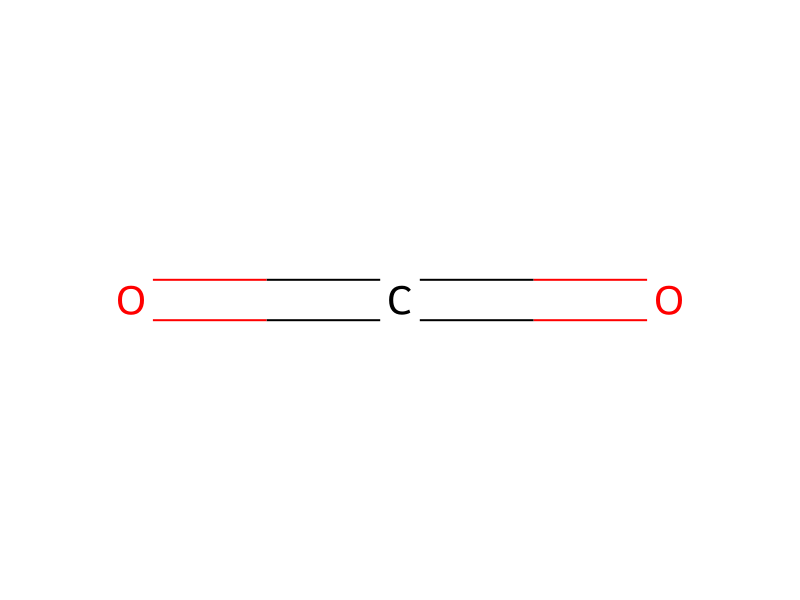
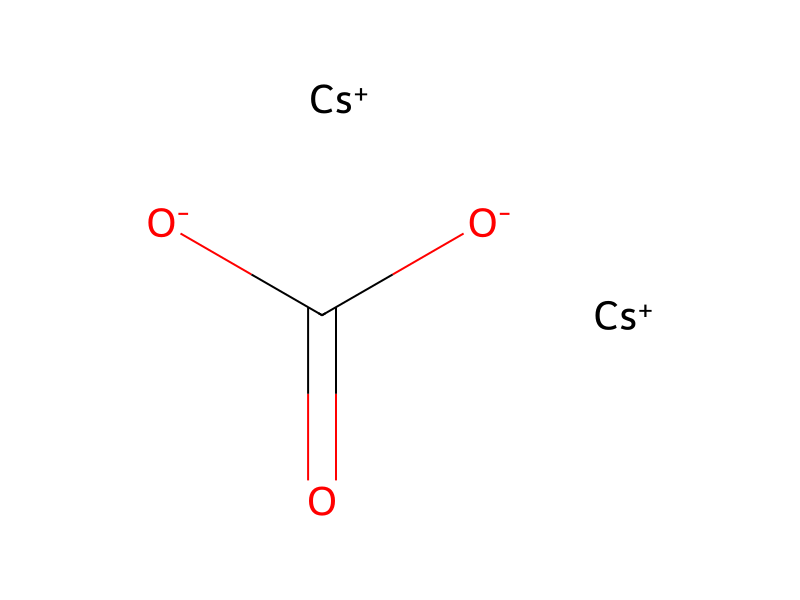
[C:1](=[O:3])=[O:2].C([O-])([O-])=O.[Cs+].[Cs+].[N+:10]([C:13]1[CH:18]=[CH:17][C:16]([C:19]#[CH:20])=[CH:15][CH:14]=1)([O-:12])=[O:11]>[C-]#[C-].[Cu+2].Cl[Cu].[Cu]>[N+:10]([C:13]1[CH:18]=[CH:17][C:16]([C:19]#[C:20][C:1]([OH:3])=[O:2])=[CH:15][CH:14]=1)([O-:12])=[O:11]Participants




Procedure
In general, terminal aromatic alkynes with an electron withdrawing group are deactivated and often inert to many transformations. With an electron withdrawing group on the phenyl ring, the nucleophilicity of C1 carbon of alkynes is reduced dramatically. The carboxylation of 4-nitro-1-ethynylbenzene was unsatisfactory with a very low yield of the corresponding acid (0-8%) under standard conditions. Low yields (around 2%) were also observed as the reaction temperature was adjusted to 0° C. and 50° C. which may be due to the low reaction rate at low temperature and the low stability of reaction intermediate at high temperature. The key step for this transformation is thought to be CO2 insertion into a copper acetylide intermediate. Increasing the nucleophilicity of the carbanionic intermediate may increase the yield of carboxylic acid product. It is well known that N-heterocyclic carbenes (NHC) can activate CO2 in various catalytic transformations. With that in mind, a new NHC—Cu co-catalyst was designed using poly-N-heterocyclic carbene (PNHC) as both ligand and catalyst. PHNC has a three dimensional network structure with carbene units located and fixed in the backbone of the network. Poly(NHC)0.5(NHC—Cu)0.5 (P1) catalyst was prepared by the reaction of 1 equivalent of CuCl with 2 equivalent of PHNC. In the structure of this catalyst, only half of the carbene species were coordinated with copper with the remainder being free carbenes. The initial experiment was conducted by using 5 mol % of P1 with Cs2CO3 as base for the carboxylation of 4-nitro-1-ethynylbenzene with CO2 at ambient conditions. Remarkably, 4-nitro-phenylpropiolic acid was produced in 70% yield after acid workup. Good yields were also achieved for terminal aromatic alkynes with other electron withdrawing groups in 36 to 48 hrs (Table 6).
Workup
- customIn general, terminal aromatic alkynes with an electron withdrawing group
- customWith an electron withdrawing group on the phenyl ring
- customLow yields (around 2%)
- customwas adjusted to 0° C. and 50° C.
- customthe low stability of reaction intermediate at high temperature
- temperatureIncreasing the nucleophilicity of the carbanionic intermediate
Sources & evidence
- ORD record
- ord-772cf3228acc4051aef9a60ac9efeb5d
- Source dataset
- uspto-grants-2014_08
- Patent number
- US08816127B2
Reaction notes
Loading…