Ethyl orthoformate → 4,7-Dimethoxy-[1,2,4]triazolo[4,3-a]quinoxaline
Reaction equation

[CH3:1][O:2][C:3]1[C:4]([NH:15][NH2:16])=[N:5][C:6]2[C:11]([N:12]=1)=[CH:10][C:9]([O:13][CH3:14])=[CH:8][CH:7]=2.[CH2:17](OC(OCC)OCC)C>>[CH3:1][O:2][C:3]1[C:4]2[N:5]([CH:17]=[N:16][N:15]=2)[C:6]2[C:11]([N:12]=1)=[CH:10][C:9]([O:13][CH3:14])=[CH:8][CH:7]=2Participants
3
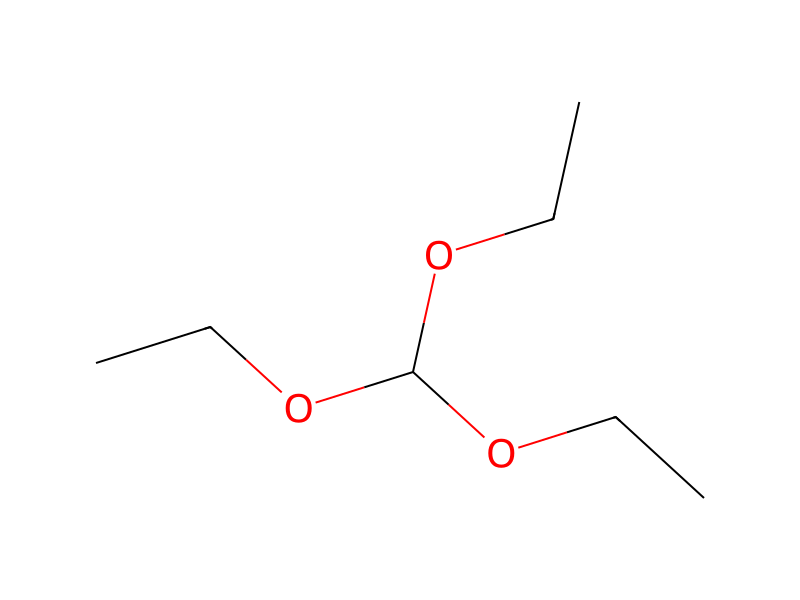


Conditions
- Temperature
- 100 °C
Procedure
A mixture consisting of 1.5 g. (0.068 mole) of 3,6-dimethoxy-2-hydrazinoquinoxaline and 20 ml. of triethylorthoformate was heated with mechanical stirring in a preheated oil bath at 100° C. overnight (~16 hours). The resulting mixture was then cooled to room temperature, and the precipitate which formed was subsequently recovered by means of suction filtration and washed with ethanol to ultimately afford 1.8 g. of pure 4,7-dimethoxy-[1,2,4]triazolo[4,3-a]quinoxaline, m.p. 238°-240° C. (decomp.). Mass Spectrum: m/e, 230 (P); m/e, 231 (P+1); m/e, 232 (P+2).
Workup
- temperatureThe resulting mixture was then cooled to room temperature
- customthe precipitate which formed
- filtrationwas subsequently recovered by means of suction filtration
- washwashed with ethanol to ultimately afford 1.8 g
Sources & evidence
- ORD record
- ord-e515ae203fd4402abc4581d689e149ca
- Source dataset
- uspto-grants-1985_01
- Patent number
- US04495187
Reaction notes
Loading…