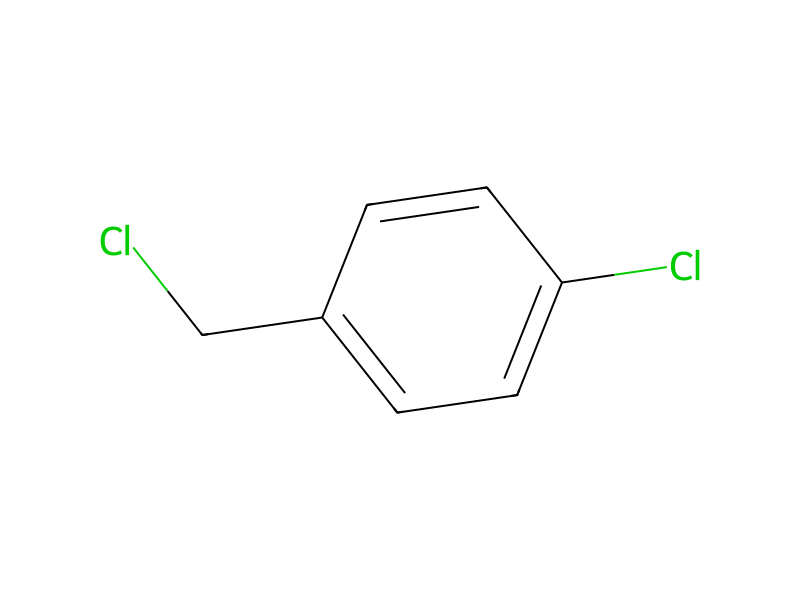
1-Chloro-4-(chloromethyl)benzene → HCID 13361806, compound
Reaction equation

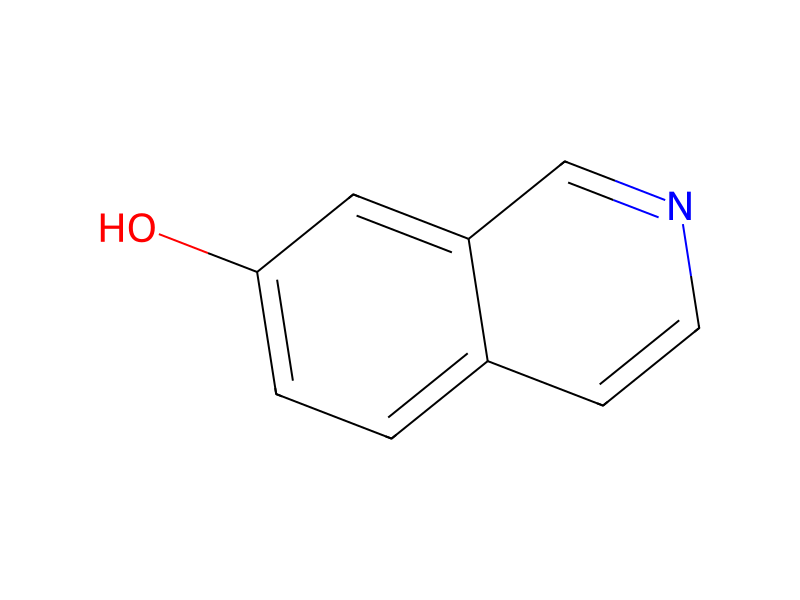
[OH:1][C:2]1[CH:11]=[C:10]2[C:5]([CH:6]=[CH:7][N:8]=[CH:9]2)=[CH:4][CH:3]=1.[Cl:12][C:13]1[CH:20]=[CH:19][C:16]([CH2:17]Cl)=[CH:15][CH:14]=1>C(O)C>[OH:1][C:2]1[CH:11]=[C:10]2[C:5]([CH2:6][CH2:7][N:8]([CH2:17][C:16]3[CH:19]=[CH:20][C:13]([Cl:12])=[CH:14][CH:15]=3)[CH2:9]2)=[CH:4][CH:3]=1Participants
4
Reactant 2
Product 1

Reagents, catalysts & solvents 1

Procedure
2.9 g of 7-hydroxyisoquinoline are heated under reflux for 8 hours with 3.5 g of 4-chlorobenzyl chloride in 30 ml of ethanol. After standing overnight, 5.7 g of the isoquinolinium salt crystallize out (melting point: 273°-274°). This salt is dissolved in 200 ml of methanol/water 9:1 and, with cooling, 6 g of sodium borohydride are added. After evolution of hydrogen has ended, the mixture is heated under reflux for 15 minutes. It is then concentrated to 1/3 of its volume, and this is poured into 200 ml of water, ammonium chloride is added to saturation, and the solid material which has precipitated out is filtered off. Recrystallization from ethanol gives 3.6 g of colorless crystals (67% of theory), melting point: 177°-178°.
Workup
- custom5.7 g of the isoquinolinium salt crystallize out (melting point: 273°-274°)
- dissolutionThis salt is dissolved in 200 ml of methanol/water 9:1
- temperaturewith cooling
- addition6 g of sodium borohydride are added
- temperaturethe mixture is heated
- temperatureunder reflux for 15 minutes
- concentrationIt is then concentrated to 1/3 of its volume
- additionthis is poured into 200 ml of water, ammonium chloride
- additionis added to saturation
- customthe solid material which has precipitated out
- filtrationis filtered off
- customRecrystallization from ethanol
Sources & evidence
- ORD record
- ord-0ba0090ba7e643689c1dd9fa5d7ed352
- Source dataset
- uspto-grants-1988_01
- Patent number
- US04717724
Reaction notes
Loading…