O-Cresol → Cyclohexanone
Reaction equation

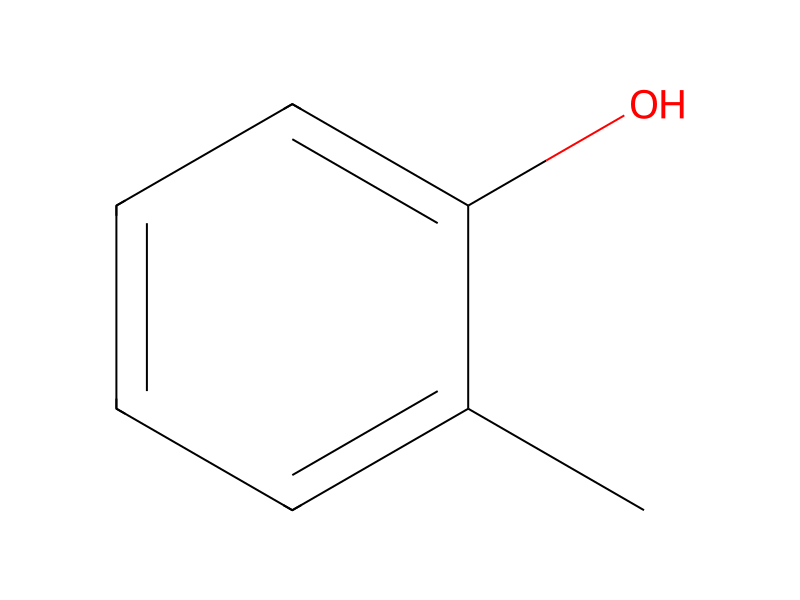
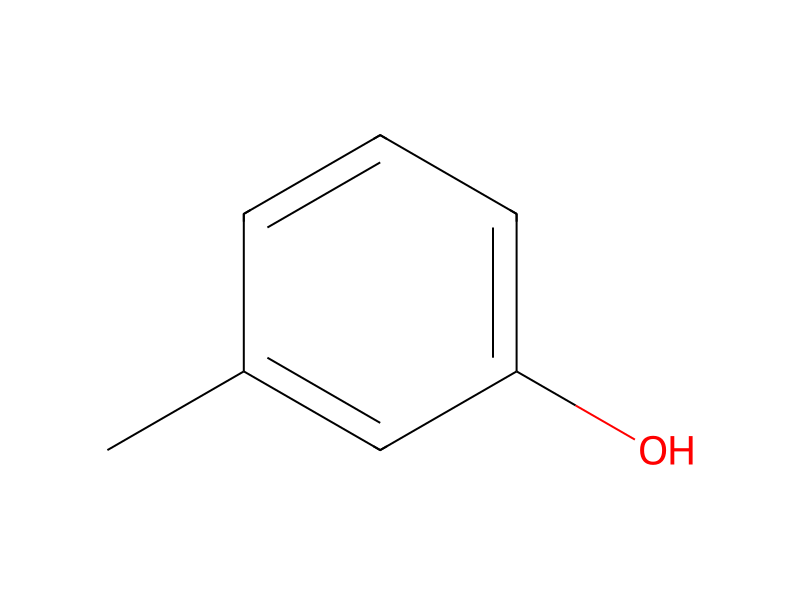
[C:1]1(O)[CH:6]=[CH:5][CH:4]=[CH:3][CH:2]=1.[C:8]1(C)[C:13]([OH:14])=[CH:12][CH:11]=[CH:10][CH:9]=1.C1C(O)=CC=CC=1C.C1(=O)CCCCC1>>[CH:1]1[CH2:6][CH2:5][CH2:4][CH2:3][CH:2]=1.[C:13]1(=[O:14])[CH2:8][CH2:9][CH2:10][CH2:11][CH2:12]1Participants


Procedure
In this example, the reaction time was set to 0.5, 1 and 2 hours, respectively. The experimental results were described as follows. When the reaction time was 0.5 hour, the selectivity of crude phenol was 100%, wherein phenol was 60% and the rest was o-cresol and m-cresol. When the reaction time was 1 hour, the selectivity of crude phenol was about 85%, and the rest was cyclohexanone. When the reaction time was 2 hours, the selectivity of crude phenol was about 82%. In this product, cyclohexene was also obtained in addition to cyclohexanone. Therefore, the o-methoxyphenol was first formed into phenol and other phenolic compounds via a hydrocracking reaction. As the reaction time was increased, the cyclohexanone was formed by the continuous hydrogenation reaction and de-olefin. Next, the cyclohexene was further formed by hydrodeoxygenation. Thus, to this example, when the reaction time was set to 0.5 hour, the phenolic compounds with high yield were immediately obtained. However, as the reaction time was prolonged, other hydrogenated by-products were generated instead.
Workup
- customwas set to 0.5, 1 and 2 hours
- customThe experimental results
- waitWhen the reaction time was 1 hour
- waitWhen the reaction time was 2 hours
Sources & evidence
- ORD record
- ord-4487135d51f642009c86a5296b707840
- Source dataset
- uspto-grants-2014_02
- Patent number
- US08648218B2
Reaction notes
Loading…