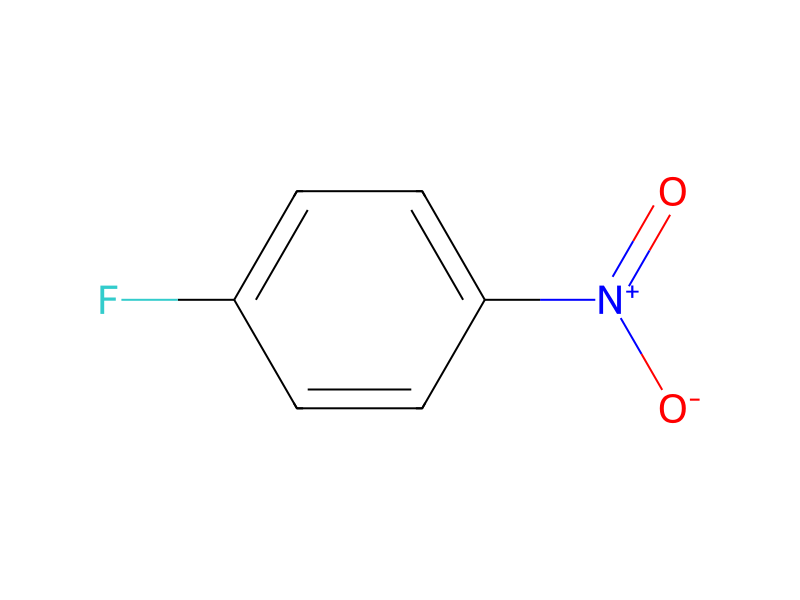
p-Fluoronitrobenzene → 4-(4-Nitrophenyl)thiomorpholine
Reaction equation

[NH:1]1[CH2:6][CH2:5][S:4][CH2:3][CH2:2]1.F[C:8]1[CH:13]=[CH:12][C:11]([N+:14]([O-:16])=[O:15])=[CH:10][CH:9]=1>>[N+:14]([C:11]1[CH:12]=[CH:13][C:8]([N:1]2[CH2:6][CH2:5][S:4][CH2:3][CH2:2]2)=[CH:9][CH:10]=1)([O-:16])=[O:15]Participants
3


Procedure
(ab) 23 ml of thiomorpholine are slowly added dropwise at about 80° to 17.17 g of p-fluoronitrobenzene in such a manner that the internal temperature does not rise above 110°. The mixture is then stirred at 120° for an additional 1 hour, whereupon it is extracted three times with 1 l of dichloromethane each time and the organic phases are washed three times with 500 ml of water each time, dried over sodium sulfate and evaporated. By recrystallization of the crude product from dichloromethane/ether, there is obtained 4-(p-nitrophenyl)-tetrahydro-4H-1,4-thiazine of melting point 142°-144°.
Workup
- customdoes not rise above 110°
- extractionis extracted three times with 1 l of dichloromethane each time
- washthe organic phases are washed three times with 500 ml of water each time
- dry with materialdried over sodium sulfate
- customevaporated
- customBy recrystallization of the crude product from dichloromethane/ether
Sources & evidence
- ORD record
- ord-86e25da52da647e687a14466a8ab7791
- Source dataset
- uspto-grants-1988_01
- Patent number
- US04720546
Reaction notes
Loading…