Acetic Acid → N-benzyl-1-phenylethylamine
Reaction equation

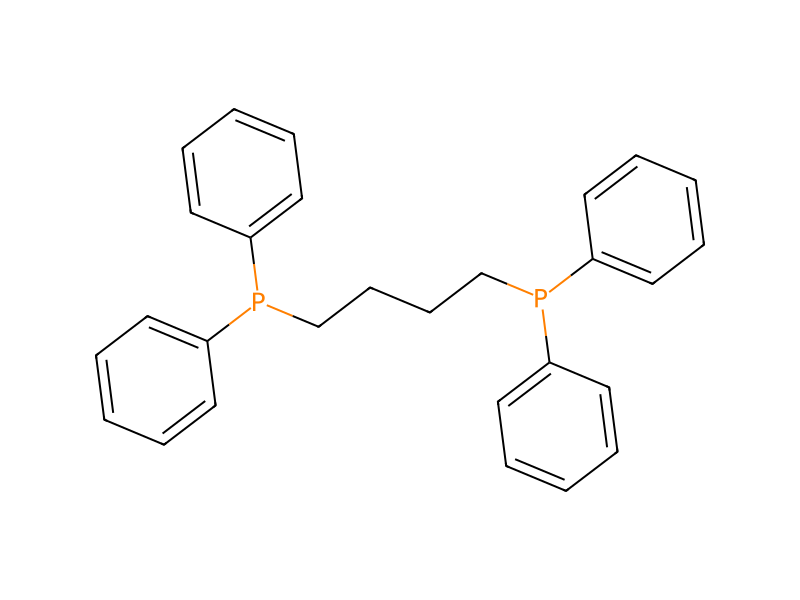
[CH2:1]([N:8]=[C:9]([C:11]1[CH:16]=[CH:15][CH:14]=[CH:13][CH:12]=1)[CH3:10])[C:2]1[CH:7]=[CH:6][CH:5]=[CH:4][CH:3]=1.C1(P(C2C=CC=CC=2)CCCCP(C2C=CC=CC=2)C2C=CC=CC=2)C=CC=CC=1.C(O)(=O)C.[H][H]>[I-].C([N+](CCCC)(CCCC)CCCC)CCC.C1(C)C=CC=CC=1>[CH2:1]([NH:8][CH:9]([C:11]1[CH:16]=[CH:15][CH:14]=[CH:13][CH:12]=1)[CH3:10])[C:2]1[CH:7]=[CH:6][CH:5]=[CH:4][CH:3]=1Participants
7






Procedure
The process is carried out as in Example 8 but the reaction conditions are modified as follows: 0.636 g (4.8 mmol) of N-benzyl-N-(1-phenylethylidene)amine, 3.2 mg (0.0048 mmol) of [Ir(1,5-cyclooctadiene)Cl]2, 4.5 mg (0.01 mmol) of 1,4-bis(diphenylphosphino)butane (ligand) and 30 mg (0.08 mmol) of tetrabutylammonium iodide, 2 ml of acetic acid, 5 ml of toluene, 40 bar of hydrogen, reaction temperature: 25° C. The reaction time is 2 hours, the conversion is complete.
Workup
- customthe reaction conditions
- custom25° C
Sources & evidence
- ORD record
- ord-b1f54ee7151c498189ea00ca8c8aa4e7
- Source dataset
- uspto-grants-2004_11
- Patent number
- US06822118B1
Reaction notes
Loading…