Glycerol → Urethane acrylate
Reaction equation

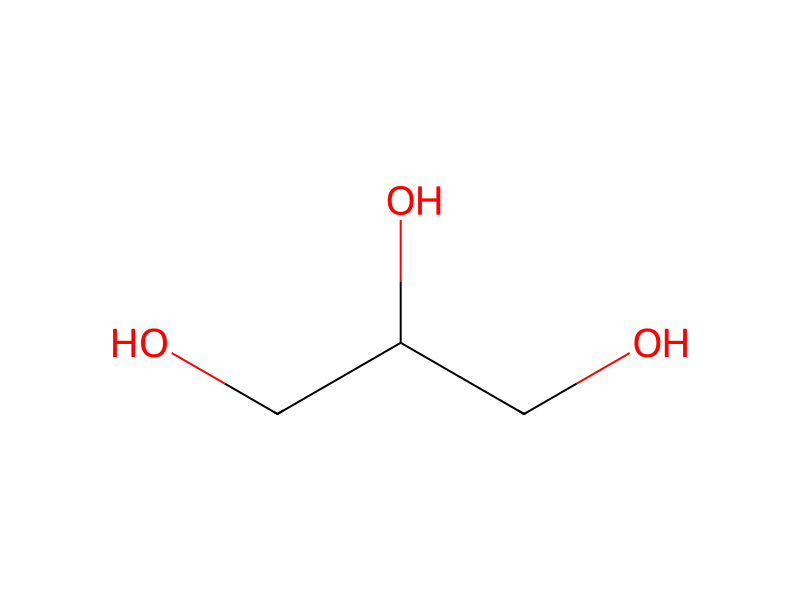
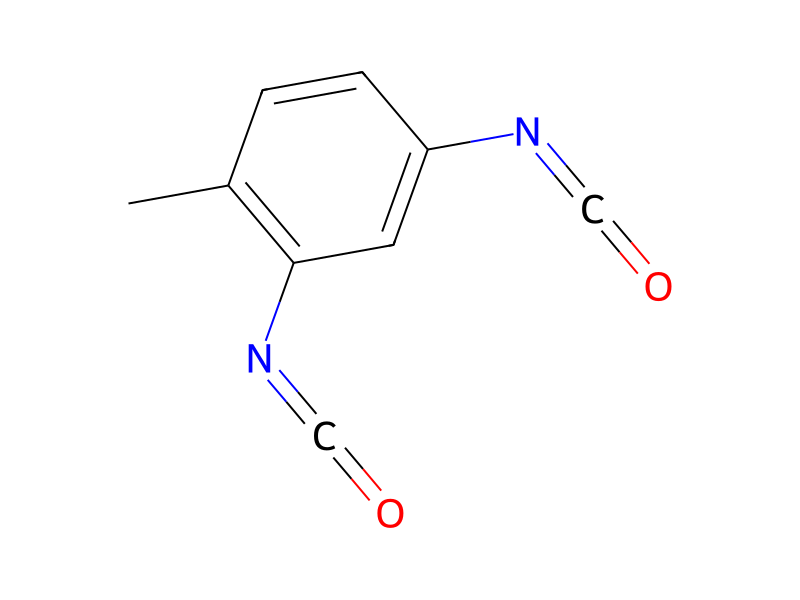
[C:1]([O:6]CCCO)(=[O:5])[C:2](C)=[CH2:3].[C:11]1(=[O:18])[CH:16]=CC(=O)C=C1.CC1C(=CC(=CC=1)N=C=O)[N:22]=[C:23]=[O:24].OCC(CO)O>C=CC1C=CC=CC=1>[C:1]([OH:6])(=[O:5])[CH:2]=[CH2:3].[NH2:22][C:23]([O:18][CH2:11][CH3:16])=[O:24]Participants
Reactant 4


Product 1

Reagents, catalysts & solvents 1

Conditions
- Temperature
- 55 °C
Procedure
A vinyl terminated, fully reacted urethane acrylate was prepared from the glycerine-modified hydroxyalkylated novolac of Example 16 in the following manner: A mixture of 1155 parts of styrene solvent, 415 parts of hydroxypropyl methacrylate, and 0.4 parts of p-benzoquinone was stirred while 519 parts of toluene diisocyanate (a mixture of approximately 80 percent 2,4-isomer and 20 percent 2,6-isomer) was added slowly so that the temperature did not exceed 45° C. The temperature was then raised to 55° C and maintained thereat for about 30 minutes. Then 510 parts of glycerine-modified hydroxypropylated novolac, prepared as in Example 16 was added and the reaction mixture was heated to 65° C an maintained at that temperature for about 4 hours. The liquid resin, thus prepared had a Brookfield viscosity of 120 centipoises at 25° C.
Workup
- customA vinyl terminated
- additionwas added slowly so that the temperature
- customdid not exceed 45° C
- temperaturemaintained
- customnovolac, prepared as in Example 16
- additionwas added
- temperaturethe reaction mixture was heated to 65° C
- temperaturean maintained at that temperature for about 4 hours
- customThe liquid resin, thus prepared
- customat 25° C.
Sources & evidence
- ORD record
- ord-26dc9cf257c44e72bb0331dc3a28fac8
- Source dataset
- uspto-grants-1978_08
- Patent number
- US04107229
Reaction notes
Loading…