Hydrochloric Acid → 3-(Bromomethyl)-2-phenylquinoline-4-carboxylic acid
Reaction equation

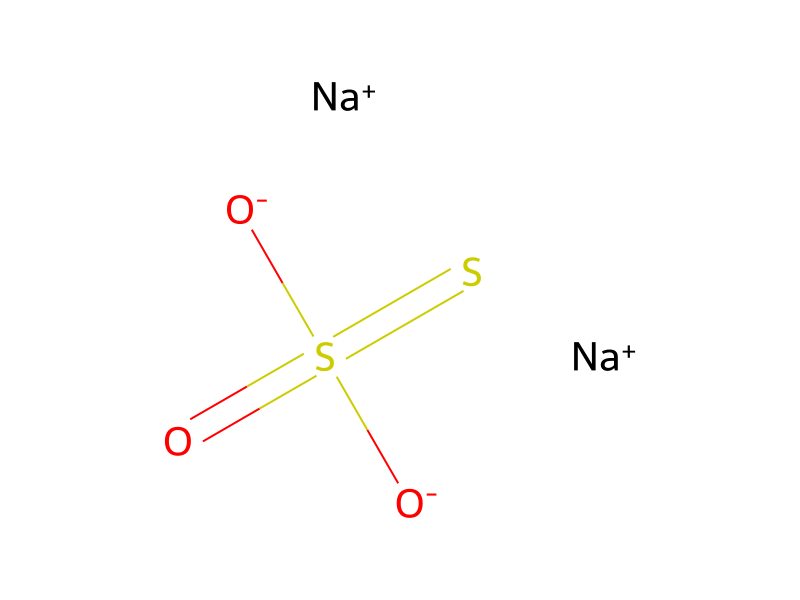
[CH3:1][C:2]1[C:3]([C:15]2[CH:20]=[CH:19][CH:18]=[CH:17][CH:16]=2)=[N:4][C:5]2[C:10]([C:11]=1[C:12]([OH:14])=[O:13])=[CH:9][CH:8]=[CH:7][CH:6]=2.[Br:21]N1C(=O)CCC1=O.S([O-])([O-])(=O)=S.[Na+].[Na+].Cl.[OH-].[Na+]>C(Cl)(Cl)(Cl)Cl.O.C(OCC)(=O)C.C(OOC(=O)C1C=CC=CC=1)(=O)C1C=CC=CC=1>[Br:21][CH2:1][C:2]1[C:3]([C:15]2[CH:20]=[CH:19][CH:18]=[CH:17][CH:16]=2)=[N:4][C:5]2[C:10]([C:11]=1[C:12]([OH:14])=[O:13])=[CH:9][CH:8]=[CH:7][CH:6]=2Participants
Reactant 5




Product 1

Reagents, catalysts & solvents 4




Procedure
To a solution of 3-methyl-2-phenylquinoline-4-carboxylic acid (1.5 g, 5.7 mmol) and N-bromosuccinimide (1.52 g, 8.5 mmol) in carbon tetrachloride (25 mL) was added benzoyl peroxide (approximately 10 mg) and heated under reflux with illumination using a long wavelength ultraviolet lamp (Blak-ray model B100-AP, Upland, Calif.). After 4 h, additional portions of N-bromosuccinimide (750 mg, 4.2 mmol) and benzoyl peroxide (approximately 10 mg) were added. After an additional 2 h, the cooled mixture was diluted with water. Sodium thiosulfate (1 g) was added, then the pH was adjusted to approximately 4.0 by addition of dilute HCl and NaOH. The mixture was further diluted with ethyl acetate, extracted, and dried (MgSO4) to afford the product as a light brown powder (1.62 g, 6.2 mmol). 1H NMR (300 MHz, DMSO) δ 8.09 (d, J=8.4 Hz, 1H), 7.96-7.86 (m, 2H), 7.76 (d, J=8.2 Hz, 1H), 7.68-7.64 (m, 2H), 7.61-7.55 (m, 3H), 4.75 (s, 2H). LRMS m/z 342.0.
Workup
- temperatureheated
- temperatureunder reflux with illumination
- waitAfter an additional 2 h
- extractionextracted
- dry with materialdried (MgSO4)
Sources & evidence
- ORD record
- ord-ce067a246cd54402bf11d0c9fe8beb54
- Source dataset
- uspto-grants-2011_06
- Patent number
- US07964733B2
Reaction notes
Loading…