Acetohydrazide → 3-methyl-6,7-dihydro-5H-pyrrolo[2,1-c][1,2,4]triazole-7-carboxylic acid
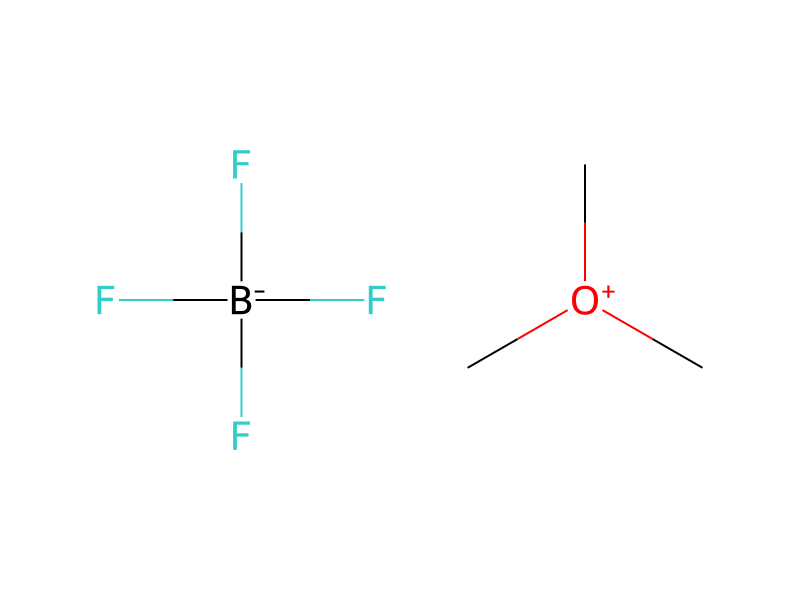
Reaction equation

O=[C:2]1[CH:6]([C:7]([O:9]CC)=[O:8])[CH2:5][CH2:4][NH:3]1.F[B-](F)(F)F.C[O+](C)C.[C:21]([NH:24][NH2:25])(=O)[CH3:22]>ClCCl>[CH3:22][C:21]1[N:3]2[CH2:4][CH2:5][CH:6]([C:7]([OH:9])=[O:8])[C:2]2=[N:25][N:24]=1Participants
Reactant 3


Product 1

Reagents, catalysts & solvents 1

Procedure
Dissolved commercially available ethyl 2-oxopyrrolidine-3-carboxylate (2.50 g, 15.91 mmol) in 30 mL dichloromethane in 50 mL round bottom flask. To this solution was added trimethyloxonium tetrafluoroborate (2.59 g, 17.5 mmol) as a solid and rinsed with 20 mL dichloromethane. The resulting mixture was stirred at room temperature for two h and LC/MS indicated that the intermediate methyl 5-methoxy-3,4-dihydro-2H-pyrrole-4-carboxylate had formed. At this point, acetohydrazide (1.18 g, 15.91 mmol) was introduced as a solid to the mixture and the resulting solution was stirred at room temperature for 3 h. The solution was then concentrated under vacuum to remove all dichloromethane and the residue was then taken up in 100 mL n-butanol which was heated to reflux in an oil bath set at 120° C. overnight. The solution was cooled to room temperature and concentrated under vacuum. The residue was purified via sixteen 1500 μm silica gel preparative plates eluting with 90:10 dichloromethane:methanol solvent system. The product was extracted from the silica gel using 85:15 dichloromethane:methanol which afforded the title compound (454 mg, 11%). 1H NMR (500 MHz DMSO-d6) δ: 4.16-4.06 (m, 1H), 4.00-3.88 (m, 1H), 2.85-2.78 (m, 1H), 2.29 (s, 3H), 1.55 (dt, J=6.7, 13.9 Hz, 2H), 1.32 (dt, J=6.7, 14.0 Hz, 2H), 0.88 (t, J=7.5 Hz, 3H). LC-MS: m/z (ES)=196 (MH)+.
Workup
- washrinsed with 20 mL dichloromethane
- customhad formed
- stirringthe resulting solution was stirred at room temperature for 3 h
- concentrationThe solution was then concentrated under vacuum
- customto remove all dichloromethane
- temperaturewas heated
- temperatureto reflux in an oil bath
- temperatureThe solution was cooled to room temperature
- concentrationconcentrated under vacuum
- customThe residue was purified via sixteen 1500 μm silica gel preparative plates
- washeluting with 90:10 dichloromethane
- extractionThe product was extracted from the silica gel using 85:15 dichloromethane
Sources & evidence
- ORD record
- ord-cea3dfcac84345a78be7f1bce7971b4c
- Source dataset
- uspto-grants-2014_02
- Patent number
- US08653260B2
Reaction notes
Loading…