Phosphorus tribromide → N-(2-Bromoethyl)-N,N-dimethylhexadecan-1-aminium bromide
Reaction equation

[Br-:1].[CH3:2][N+:3]([CH3:23])([CH2:20][CH2:21]O)[CH2:4][CH2:5][CH2:6][CH2:7][CH2:8][CH2:9][CH2:10][CH2:11][CH2:12][CH2:13][CH2:14][CH2:15][CH2:16][CH2:17][CH2:18][CH3:19].P(Br)(Br)[Br:25]>C1C=CC=CC=1>[Br-:25].[CH3:2][N+:3]([CH3:23])([CH2:20][CH2:21][Br:1])[CH2:4][CH2:5][CH2:6][CH2:7][CH2:8][CH2:9][CH2:10][CH2:11][CH2:12][CH2:13][CH2:14][CH2:15][CH2:16][CH2:17][CH2:18][CH3:19]Participants
4
Reactant 2
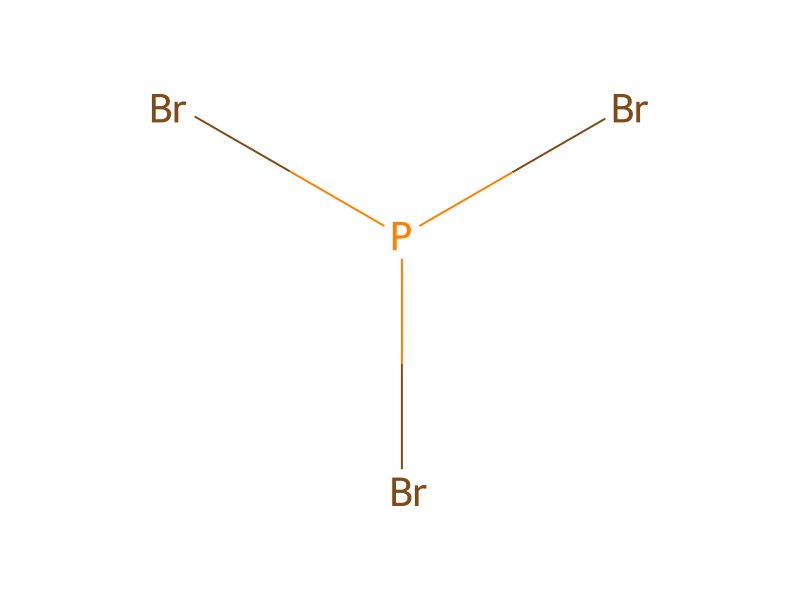

Product 1

Reagents, catalysts & solvents 1

Procedure
A total of 3.95g (0.010 mole) of dimethyl-(2-hydroxy)ethyl-hexadecyl ammonium bromide and 0.9910g (0.00366 mol phosphorous tribromide was slurried in 20 ml of benzene and allowed to react at room temperature (about 25° C.) with stirring for 24 hours under nitrogen. The solvent was removed in vacuo and the residue washed several times with anhydrous ether. The resulting amorphous solid was recrystallized from ethyl acetate, filtered and dried to yield 3.57g (77%) of the desired product. Calc. % C 52.51, % H 9.49, %N 3.06, %Br 34.93; Found % C 51.80, H 10.06, %N 3.06, % Br 34.18; m.p. 185°-190° C. The 1H NMR and IR agree with the proposed structure.
Workup
- customto react at room temperature (about 25° C.)
- customThe solvent was removed in vacuo
- washthe residue washed several times with anhydrous ether
- customThe resulting amorphous solid was recrystallized from ethyl acetate
- filtrationfiltered
- customdried
Sources & evidence
- ORD record
- ord-309c2167908a4d9ebd851723455230b7
- Source dataset
- uspto-grants-1993_05
- Patent number
- US05211942
Reaction notes
Loading…