Sodium hydride → (S)-4-Chloro-1-(3-chloro-1-phenyl-propyl)-1H-indole
Reaction equation

[Cl:1][C:2]1[CH:10]=[CH:9][CH:8]=[C:7]2[C:3]=1[CH:4]=[CH:5][NH:6]2.[H-].[Na+].[Cl:13][CH2:14][CH2:15][CH:16](OS(C)(=O)=O)[C:17]1[CH:22]=[CH:21][CH:20]=[CH:19][CH:18]=1>CN(C=O)C>[Cl:1][C:2]1[CH:10]=[CH:9][CH:8]=[C:7]2[C:3]=1[CH:4]=[CH:5][N:6]2[C@H:16]([C:17]1[CH:22]=[CH:21][CH:20]=[CH:19][CH:18]=1)[CH2:15][CH2:14][Cl:13]Participants

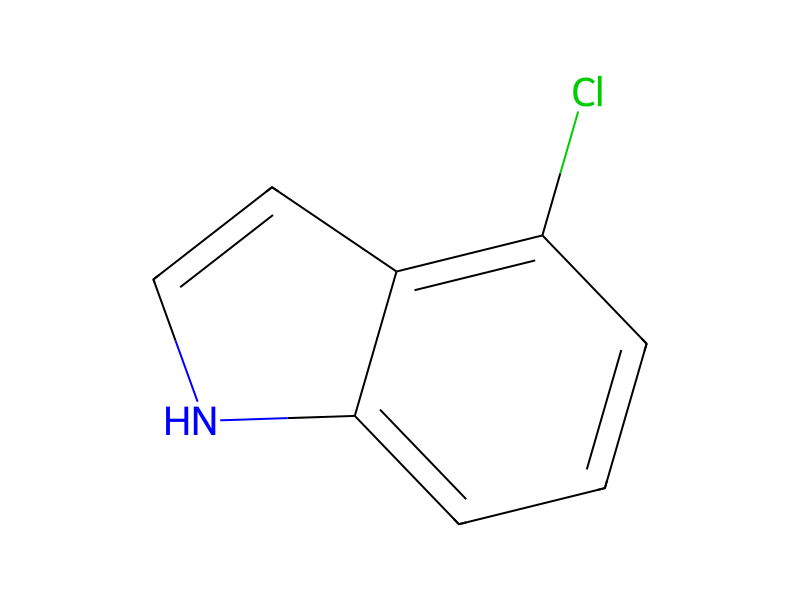



Procedure
To a solution of 4-chloroindole (0.222 g) in dry DMF (7.5 ml) was added sodium hydride (0.064 g) at room temperature. The mixture was stirred at the same temperature for 30 minutes and then the crude methanesulfonic acid 3-chloro-1-phenyl-propyl ester from the previous step was dissolved in DMF (5 ml) and added at 0° C. to the reaction mixture and stirred for 2 hours. The reaction mixture was partitioned between ethyl acetate and water, the organic layer was washed twice with water and once with brine, then dried over magnesium sulfate, filtered and evaporated to dryness to afford an oil. Purification of the crude product was done by column chromatography on silica gel, eluting the desired product with ethyl acetate-hexane (1:9). The (S) 4-chloro-1-(3-chloro-1-phenyl-propyl)-1H-indole thus produced weighed 0.251 g, sufficiently pure for use in the following step.
Workup
- additionadded at 0° C. to the reaction mixture
- stirringstirred for 2 hours
- customThe reaction mixture was partitioned between ethyl acetate and water
- washthe organic layer was washed twice with water and once with brine
- dry with materialdried over magnesium sulfate
- filtrationfiltered
- customevaporated to dryness
- customto afford an oil
- customPurification of the crude product
- washeluting the desired product with ethyl acetate-hexane (1:9)
Sources & evidence
- ORD record
- ord-00b43d95f8f2418a9335e891c82d3fe3
- Source dataset
- uspto-grants-2011_01
- Patent number
- US07863305B2
Reaction notes
Loading…