Acetone → 4,5-dibromo-1-(3-chloro-2-pyridinyl)-1H-pyrrole-2-carboxylic acid
Reaction equation

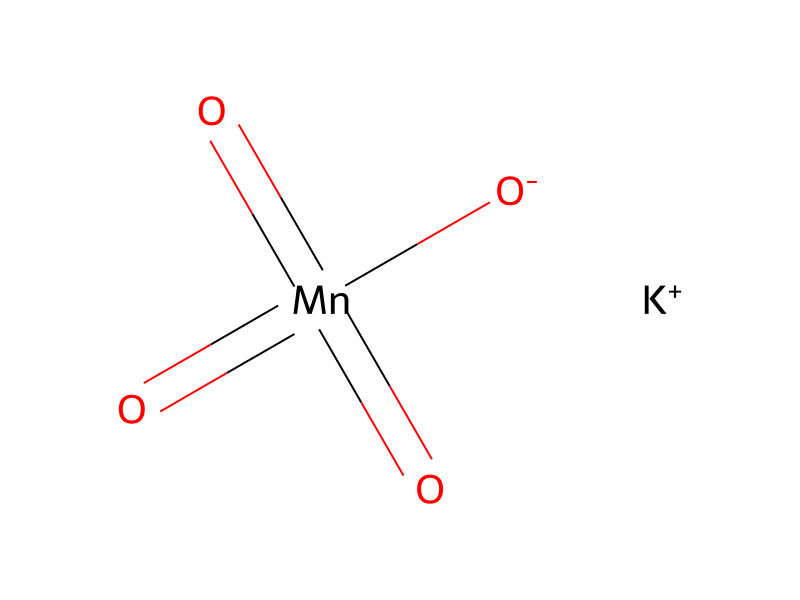
[Br:1][C:2]1[CH:3]=[C:4]([CH:15]=[O:16])[N:5]([C:8]2[C:13]([Cl:14])=[CH:12][CH:11]=[CH:10][N:9]=2)[C:6]=1[Br:7].CC(C)=[O:19].[Mn]([O-])(=O)(=O)=O.[K+]>O>[Br:1][C:2]1[CH:3]=[C:4]([C:15]([OH:19])=[O:16])[N:5]([C:8]2[C:13]([Cl:14])=[CH:12][CH:11]=[CH:10][N:9]=2)[C:6]=1[Br:7]Participants
Reactant 3


Product 1

Reagents, catalysts & solvents 1

Conditions
- Temperature
- 60 °C
Procedure
To a mixture of 1.0 g of 4,5-dibromo-1-(3-chloro-2-pyridinyl)-1H-pyrrole-2-carbaldehyde, 15 ml of acetone and 7 ml of water was slowly added 1.3 g of potassium permanganate at 40° C. The resulting mixture was stirred at 60° C. for 2 hours. Precipitates in the reaction mixture were removed by filtration. The resulting filtrate was washed with chloroform two times. The aqueous layer was adjusted to around pH 3 by an addition of 2N hydrochloric acid and then extracted with ethyl acetate three times. The organic layers were combined, washed with an aqueous saturated sodium chloride solution, dried over anhydrous magnesium sulfate, and then concentrated under reduced pressure to obtain 0.69 g of 4,5-dibromo-1-(3-chloro-2-pyridinyl)-1H-pyrrole-2-carboxylic acid of the formula:
Workup
- customat 40° C
- customPrecipitates in the reaction mixture
- customwere removed by filtration
- washThe resulting filtrate was washed with chloroform two times
- additionThe aqueous layer was adjusted to around pH 3 by an addition of 2N hydrochloric acid
- extractionextracted with ethyl acetate three times
- washwashed with an aqueous saturated sodium chloride solution
- dry with materialdried over anhydrous magnesium sulfate
- concentrationconcentrated under reduced pressure
Sources & evidence
- ORD record
- ord-d230ad2275694666b3c5b697ba7d4dea
- Source dataset
- uspto-grants-2011_01
- Patent number
- US07867949B2
Reaction notes
Loading…