1-(Bromomethyl)-4-chlorobenzene → 4-((4-Chlorobenzyl)oxy)-3-fluorobenzaldehyde
Reaction equation

[Cl:1][C:2]1[CH:9]=[CH:8][C:5]([CH2:6]Br)=[CH:4][CH:3]=1.[F:10][C:11]1[CH:12]=[C:13]([CH:16]=[CH:17][C:18]=1[OH:19])[CH:14]=[O:15]>>[Cl:1][C:2]1[CH:9]=[CH:8][C:5]([CH2:6][O:19][C:18]2[CH:17]=[CH:16][C:13]([CH:14]=[O:15])=[CH:12][C:11]=2[F:10])=[CH:4][CH:3]=1Participants
3

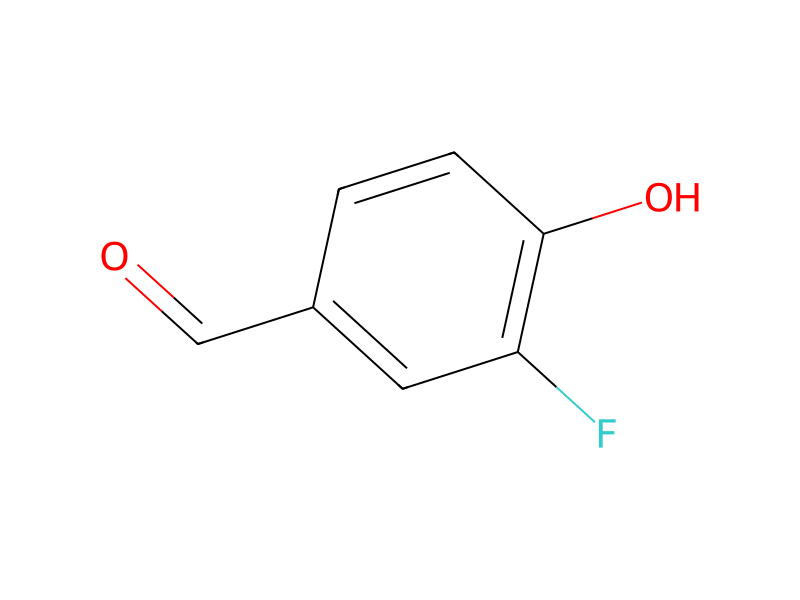

Procedure
Additional aldehydes were prepared using the protocol of Scheme 14, replacing either 4-chlorobenzyl bromide 22 with a suitable alkylating agent, and/or 3-fluoro-4-hydroxy-benzaldehyde 44 with a suitable aldehyde. The following table indicates the alkylating agent (column 1) and the starting aldehyde (column 2) used to afford the aldehyde (column 3) synthesized following this protocol.
Sources & evidence
- ORD record
- ord-01feada5059d43139e39529df3f2287c
- Source dataset
- uspto-grants-2011_01
- Patent number
- US07872018B2
Reaction notes
Loading…