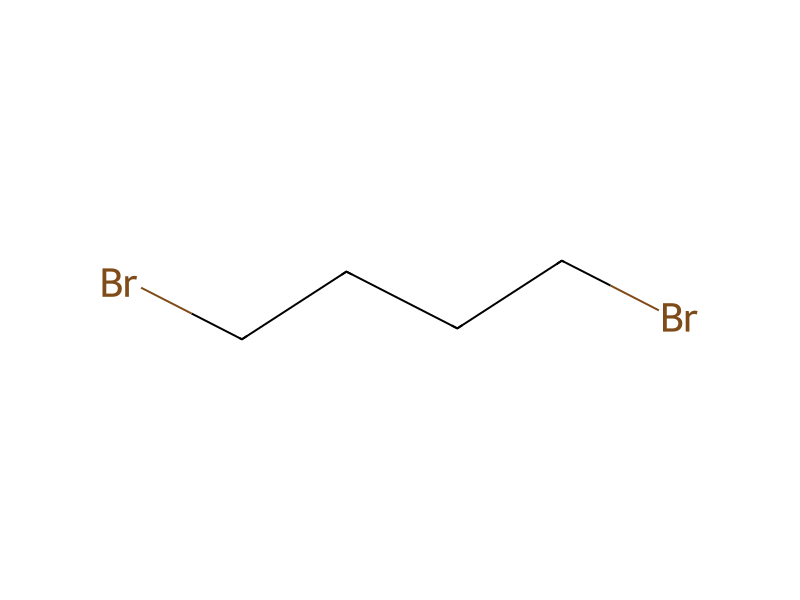
1,4-Dibromobutane → HCID 178485971, compound
Reaction equation

[Cl:1][C:2]1[CH:7]=[CH:6][C:5]([O:8][C:9](=[O:19])[N:10]([C@H:12]2[CH2:17][CH2:16][C@H:15]([OH:18])[CH2:14][CH2:13]2)[CH3:11])=[CH:4][CH:3]=1.[Br:20][CH2:21][CH2:22][CH2:23][CH2:24]Br>>[Cl:1][C:2]1[CH:3]=[CH:4][C:5]([O:8][C:9](=[O:19])[N:10]([C@H:12]2[CH2:17][CH2:16][C@H:15]([O:18][CH2:24][CH2:23][CH2:22][CH2:21][Br:20])[CH2:14][CH2:13]2)[CH3:11])=[CH:6][CH:7]=1Participants
3


Procedure
In analogy to example 11.5, trans-(4-Hydroxy-cyclohexyl)-methyl-carbamic acid 4-chloro-phenyl ester and 1,4-dibrombutane were reacted to yield trans-[4-(4-Bromo-butoxy)-cyclohexyl]-methyl-carbamic acid 4-chloro-phenyl ester as yellowish oil, MS:
Sources & evidence
- ORD record
- ord-90f5dd2790fa44009e0e5dbe767c8f70
- Source dataset
- uspto-grants-2005_02
- Patent number
- US06858651B2
Reaction notes
Loading…