Acetic Acid → HCID 178512115, compound
Reaction equation

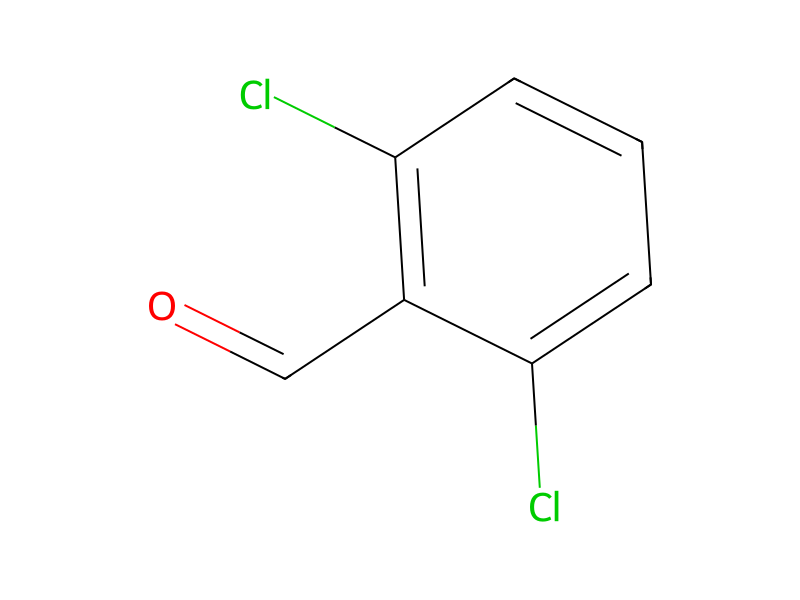
[Cl:1][C:2]1[CH:9]=[CH:8][CH:7]=[C:6]([Cl:10])[C:3]=1[CH:4]=O.I.[NH2:12][NH:13][C:14]([NH:16][CH2:17][C:18]1[O:22][CH:21]=[CH:20][CH:19]=1)=[NH:15].C(O)(=O)C.[OH-].[Na+]>CCOCC.C(O)C.O>[Cl:1][C:2]1[CH:9]=[CH:8][CH:7]=[C:6]([Cl:10])[C:3]=1[CH:4]=[N:12][NH:13][C:14]([NH:16][CH2:17][C:18]1[O:22][CH:21]=[CH:20][CH:19]=1)=[NH:15]Participants
8







Procedure
A solution of 1.75 g. of 2,6-dichlorobenzaldehyde and 2.82 g. of 1-amino-3-furfurylguanidine hydriodide in 15 ml. of glacial acetic acid is heated at 100° C. for one hour, cooled, and diluted with absolute ether until crystallization occurs. Filtration gives 3.51 g. of gray-colored crystals. The crystals are dissolved by warming in absolute ethanol and the solution is treated with excess 10N sodium hydroxide and diluted with water to turbidity. Chilling and filtration give 2.00 g. of nearly colorless crystals. Two recrystallizations from aqueous ethanol, using activated charcoal, give the desired product as colorless crystals, m.p. 134°-135.5° C.
Workup
- temperaturecooled
- filtrationFiltration
- customgives 3.51 g
- dissolutionThe crystals are dissolved
- temperatureChilling
- filtrationfiltration
- customgive 2.00 g
- customTwo recrystallizations from aqueous ethanol
Sources & evidence
- ORD record
- ord-f2f5f739fc294997b70d42275b177bfb
- Source dataset
- uspto-grants-1979_05
- Patent number
- US04154947
Reaction notes
Loading…