Terephthaloyl chloride → 2H-Azepin-2-one, 1,1'-(1,4-phenylenedicarbonyl)bis[hexahydro-
Reaction equation

[C:1](Cl)(=[O:11])[C:2]1[CH:10]=[CH:9][C:5]([C:6](Cl)=[O:7])=[CH:4][CH:3]=1.[C:13]1(=[O:20])[NH:19][CH2:18][CH2:17][CH2:16][CH2:15][CH2:14]1>C1CCCCC1.N1C=CC=CC=1>[C:1]([N:19]1[CH2:18][CH2:17][CH2:16][CH2:15][CH2:14][C:13]1=[O:20])(=[O:11])[C:2]1[CH:10]=[CH:9][C:5]([C:6]([N:19]2[CH2:18][CH2:17][CH2:16][CH2:15][CH2:14][C:13]2=[O:20])=[O:7])=[CH:4][CH:3]=1Participants
5
Reactant 2

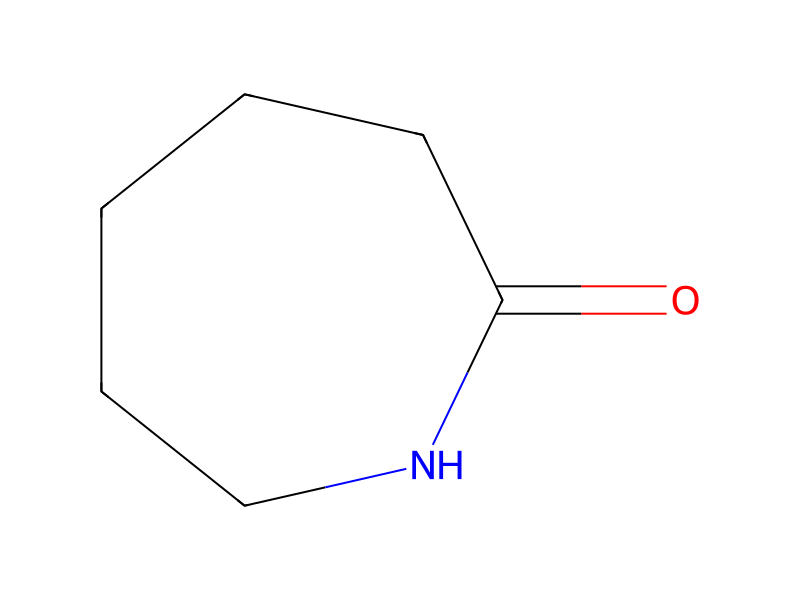
Product 1

Reagents, catalysts & solvents 2


Procedure
Terephthaloyl chloride (51 g, 0.25 mol) is added in the course of 30 minutes to a solution of ε-caprolactam (56.6 g, 0.5 mol) in 400 ml of cyclohexane and 117 ml of pyridine at room temperature. The mixture is then refluxed for 4 h. After cooling, the resulting light yellow precipitate is filtered off by suction, washed with water and dried. Yield 81 g (91%).
Workup
- temperatureThe mixture is then refluxed for 4 h
- temperatureAfter cooling
- filtrationthe resulting light yellow precipitate is filtered off by suction
- washwashed with water
- customdried
Sources & evidence
- ORD record
- ord-f7051754a9834235a3ddac34e2b347c0
- Source dataset
- uspto-grants-1997_07
- Patent number
- US05648521
Reaction notes
Loading…